
Extinction control processes of indigenous biodiversity knowledge will require the application of Artificial Intelligence and Science, Technology, Engineering and Mathematics Education (STEM).
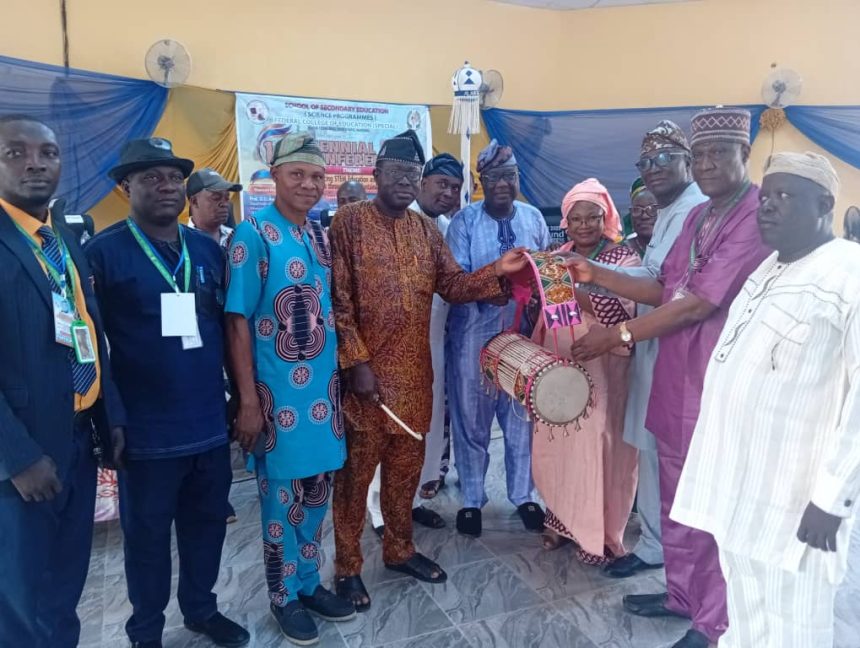
This observation was established at the Biennial Conference and Award presentation organised by the School of Secondary Education, Science Programme, Federal College of Education, Special, Oyo, held recently at the institution’s premises.
Speaking at the conference on the theme ‘Advancing (STEM) Education and Indigenous Knowledge, through AI for sustainable biodiversity’, the keynote presenter, Professor David Aworinde, from Olusegun Agagu University of Science and Technology, Ondo State, noted in his paper the necessity to synergise Artificial Intelligence (AI) with indigenous knowledge of biodiversity for its preservation and for future reference.
Aworinde, a Professor of Plant Taxonomy/Anatomy, noted with dismay the extinction propensity of many of the plants and animals that are highly medicinal for human consumption, resulting from urbanisation and deforestation.
He emphasised the need to document indigenous biodiversity knowledge by AI Technology System and through STEM education for its sustainability.
“We must find the way to preserve our biodiversity by keeping botanical gardens, promoting Afforestation.
“The habit of some people concealing the indigenous knowledge from themselves should be discouraged,” he said.
Speaking in the same vein, the lead paper presenter, Dr Oyetunji Raji, from Emmanuel Alayande University of Education, Oyo, asserted that the application of AI and STEM to address the extinction tendency of indigenous knowledge could not be overemphasised.
According to him, AI will enable us to digitalise indigenous knowledge and preserve it for future use.
He noted that the indigenous knowledge is dying, and unless it is documented and achieved through AI and disseminated to our youngsters through STEM education.
“One of the key aspects of national development is Biodiversity conservation.
“The knowledge of living organisms, including plants, and their contributions to human lives cannot be overemphasised. There is a challenge in the way people react negatively to the environment.
“If people decline and support the growth of the ecosystem, it will boost development in biodiversity,” he noted.
The Dean of the School, Dr Shskirat Ambibola Adesola, declared that the reasons for choosing the theme for the conference were informed by a convergence of global challenges, policy directions, technological advancements, and educational gaps.
According to her, it is not arbitrary; rather, it emerges from several compelling drivers such as: global biodiversity crisis, underutilisation of indigenous knowledge systems (IKS), rapid advancement of Artificial Intelligence (AI), needs for transformative STEM Education, education inequality and inclusion, policy and research trends, and technological opportunities in biodiversity monitoring.
She advised the stakeholders, traditional medical practitioners, local farmers, and other stakeholders to actively document, preserve, and share indigenous knowledge through sustainable practices, community engagement, and collaboration with educators and researchers, while leveraging AI and digital tools to enhance biodiversity education and conservation efforts.
“At the same time, governments, schools, and organisations such as UNESCO and the World Health Organisation should provide policy support, funding, and inclusive educational frameworks that integrate indigenous knowledge into STEM systems, ensuring ethical use, youth engagement, and long-term sustainability of biodiversity.
“It is the responsibility of institutions, educators and institutions to contextualise STEM curricula by integrating indigenous knowledge and local biodiversity examples, promote field-based and experiential learning, and leverage AI-driven tools to document, preserve, and enhance students’ understanding of environmental sustainability, which is fundamental to indigenous knowledge preservation processes.
The Provost of the institution, Dr Rauf Salami, in his remarks, described the theme of the conference as apt, saying that the intersection of science, technology and innovation will continue to shape the future of society.
He asserted that Artificial Intelligence has emerged as one of the most powerful technological forces of the 21st century, redefining how we teach, learn, research and also solve complex global challenges.
The Provost, while commending the Dean and her working team for organising the conference, noted that Federal College of Education, Special Oyo occupied a strategic position in preparing educators who will shape the next generation of scientists, innovators and environmentally conscious citizens.
WATCH TOP VIDEOS FROM NIGERIAN TRIBUNE TV
- Relationship Hangout: Public vs Private Proposals – Which Truly Wins in Love?
- “No” Is a Complete Sentence: Why You Should Stop Feeling Guilty
- Relationship Hangout: Friendship Talk 2025 – How to Be a Good Friend & Big Questions on Friendship
- Police Overpower Armed Robbers in Ibadan After Fierce Struggle


