
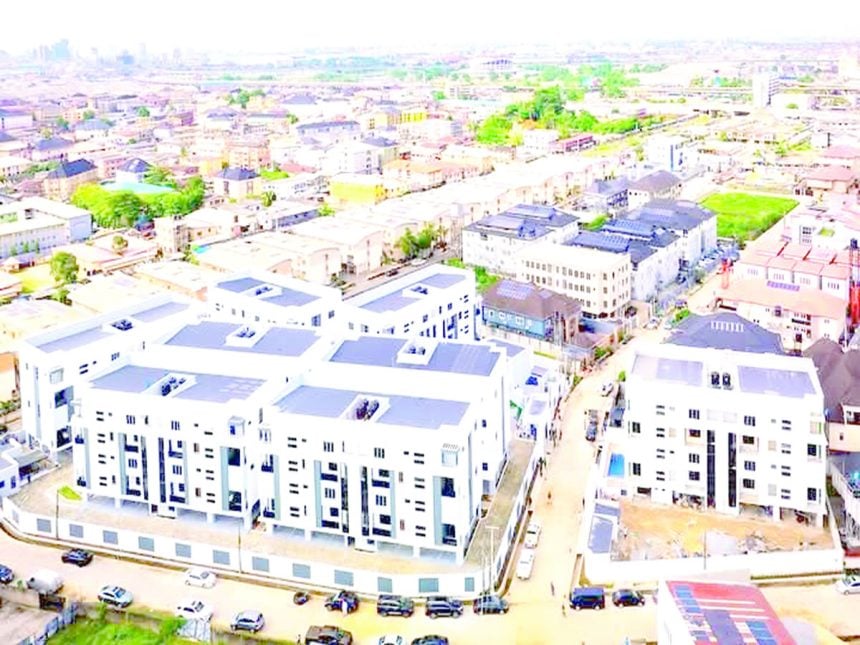
FORMER President, African Chapter of International Real Estate Federation ( FIABCI), Mr. Chudi Ubosi, has blamed the rising rent crisis in most Nigerian cities on inflation, high cost of building materials, urbanisation driving by economic opportunities, lack of infrastructure outside the main cities, greed, speculation, increasing land value, high government’s charges, limited assess to development finance, and failure of institutions, among others.
He explained that inflation induced most of the building material costs, pointing out that between 2021 and 2025, cost of a tipper of sharp sand jumped to N178,000 from N35,000; while cement upped to N12,000 from N3,500 per bag.
Also, he said the cost of labour moved from N2,500 to N10,000 per day.
Explaining the genesis, he said: “Present administration in 2023 started of with several policy changes that impacted the economic trajectory of the Nation.
ALSO READ: INEC plotting to prevent us from fielding candidates – ADC
Fuel moved from N200/litre N600/litre and eventuaily N1,000/litre.
“Currently, there is differential pricing based on location and tied to the international price of oil.
FX rates moved from N600 per dollar to nearly N1,800 per dollar. For a country that imports nearly all its needs it was bound to come back to haunt us
“Fuel drives trlransportation, distribution of goods, food etc, prices went up. Inflation currently stands 15.06 per cent.”
According to him, the long term effect is that properties became more expensive to build while landlords increased rents to make their investments sensible
On urbanisation and economic opportunities, Ubosi explained that many cities have continued to bear the brunt of the rural-urban migration in search of greener pastures and better quality of life.
“Lagos has a net in flow of migrants of about 2000 people daily-and they come from all over the country and the West African subregion,” he said
Following the inflation, high materials cost and rural – urban migration, Ubosi pointed out that lack of infrastructure and services outside the main cities also contributed to high rents
“These things are desirable and important for the average being and their absence in the rural areas means that many emigrate to the urban areas looking for them, therefore adding to the pressure, increasing competition and therefore causing high rents,” he said.
He added that increasing land values in the urban centers contributed high rental values in Nigerian cities.
“Urban Centres continue to enjoy increase land values as a result of infrastructure and services and there in themselves tend to increase acquisition costs,” he said.
The real estate expert also blamed limited access to finance coupled with high interest rates along the entire chain of the housing spectrum for housing affordability crisis in Nigeria.
“Limited access connotes the inability to secure funding as a result of low income, lack of credit history, difficult in meeting onerous conditions for financial assistance,
“This limited access cuts across the entire industry materials vendors, professionals, artisans etc.
“Apart from the limited access when this financing is available, it comes with high interest rates-28 per cent to 40 per cent that makes developments very difficult to be profitable,” Ubosi said.
According to him, the cost of obtaining approvals from physical planning authorities is not usually cheap.
Besides, he said the time spent going back and forth to make the requested changes often resulted in cost’s escalation.
“There is the spurious visits and constant harassment on site by government officials where by more money is spent, all adding to the final cost of delivery,” added.
He also blamed the failure or weakness of government’s institutions to be proactive for the housing affordability crisis
“One of the areas where many have forgotten is the area at our institutions and the effect of their weaknesses.
“Today in Nigeria tenants will pay rent for a year or a few months and then fail to pay for the next 5 to 8 years engaging the landlord in court using all manner of legalistic craftiness to deprive him of his rent.
“The long-term effect which we are all beginning to witness is that fewer and fewer people are building houses for lease or tenant occupation, preferring instead to put their monies stress free, in money market investments and others of that nature.,” Ubosi said.
WATCH TOP VIDEOS FROM NIGERIAN TRIBUNE TV
- Relationship Hangout: Public vs Private Proposals – Which Truly Wins in Love?
- “No” Is a Complete Sentence: Why You Should Stop Feeling Guilty
- Relationship Hangout: Friendship Talk 2025 – How to Be a Good Friend & Big Questions on Friendship
- Police Overpower Armed Robbers in Ibadan After Fierce Struggle


