

The landscape of modern journalism is no longer just about the “who, what, where, and when”. In an era dominated by rapid-fire information and sophisticated misinformation, the ‘how’ has become equally critical. Equipping the media with the right tools to be at their best on the field has become the most important milestone for every media platform. Recognising this shift, Google, in a strategic partnership with the Nigeria Union of Journalists (NUJ), Oyo and Ogun State Councils, recently concluded a high-impact capacity-building program: the Google Media Labs for Growth.
Held on February 24 and 26, the training brought together approximately 250 journalists across the two states. Representing print, broadcast, and digital platforms, these media professionals gathered to bridge the gap between traditional reporting and the cutting-edge digital tools required for 21st-century storytelling.
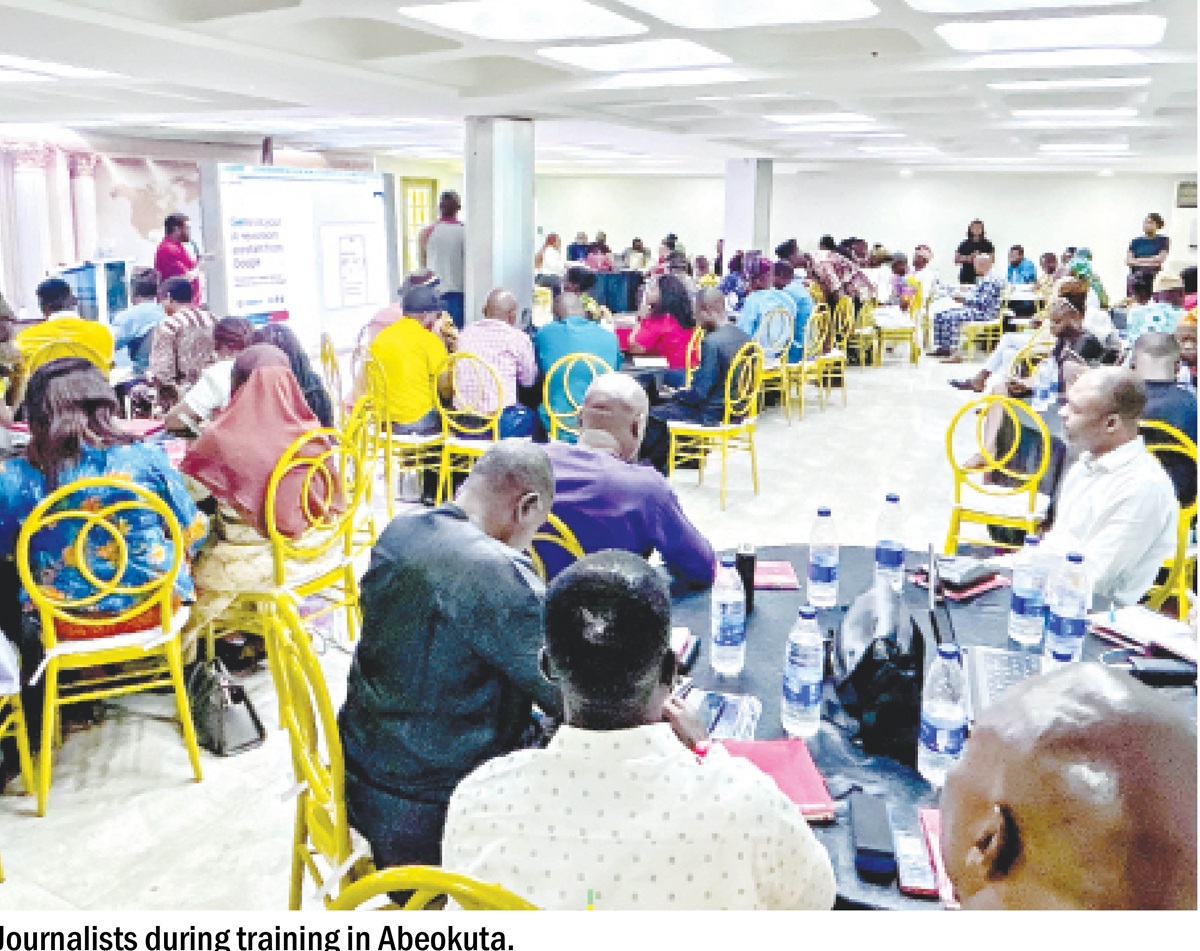
The training, led by Taiwo Kola-Ogunlade, Communications and PR Manager, West Africa and Ken Kiungu, Google News Initiative (GNI) Trainer, Sub Saharan Africa, was designed to address the evolving challenges of the Nigerian media space, particularly the need for general data-driven reporting and rigorous fact-checking, especially with the upcoming electoral cycle.
During the Ibadan training on February 24, in his opening remarks, Comrade Akeem Abas, Chairman of the Oyo State NUJ, emphasised that the initiative was a fulfilment of his administration’s promise to prioritise ‘policy-driven unionism’.
“AI and digital tools will not replace journalists; they will only replace journalists who refuse to learn,” Abas noted. “By equipping our members with these skills, we are ensuring their relevance, sustainability, and dignity in a rapidly changing global economy.”
His counterpart from the Ogun State council, Comrade Akinwale Olanrewaju, on February 26, echoed these sentiments, highlighting that the synergy between Google and the NUJ serves as a beacon for how technology companies and professional bodies can collaborate to safeguard the integrity of information.
READ ALSO: Lassa fever hits 18 states, 28 health workers infected – NCDC
The core of the sessions focused on the Google News Initiative (GNI) suite—a collection of tools designed to streamline the editorial workflow, enhance investigative depth, and secure digital assets. Facilitators guided participants through hands-on sessions involving several key applications, which included verification and fact-checking, advanced research with Google Trends, used to gauge public interest in specific topics, allowing newsrooms to align their content with what audiences are actually searching for, Gemini and NotebookLM, among others.
The sessions also delved into generative AI, specifically Gemini. Participants were taught “effective prompting”—the art of giving precise instructions to AI to help summarise long reports, generate story angles, or transcribe interviews. NotebookLM was also introduced as a personalised AI research assistant that helps journalists synthesise notes from multiple sources into a coherent narrative.
The impact of the training was immediate, as evidenced by the feedback from participants and government officials in attendance. Prince Dotun Oyelade, the Oyo State Commissioner for Information, described the training as ‘timely and essential’.
“The media is the mirror of society. If that mirror is blurred by a lack of technical skill, the whole nation suffers. This collaboration with Google ensures that our journalists in Oyo State are looking through a clear, modern lens,” Oyelade said.
For many participants, the training provided a much-needed confidence boost. Mrs Bose Oyewole, a veteran journalist and stakeholder, remarked on the bridge between generations:
“Even for those of us who started in the era of typewriters, these tools are accessible. They don’t take away the soul of our stories; they just give us faster, more accurate ways to tell them.”
Another respondent said, “I used to spend hours manually checking search results for my investigative pieces. Learning how to use ‘Advanced Search Operators’ and ‘Google Alerts’ during this session has essentially given me back hours of my day. I can now track stories in real-time as they break across the globe.”
A recurring theme throughout the two-day event was the role of the media in the upcoming 2027 general elections. The NUJ leadership took the opportunity to appeal to Google Africa for continued support in developing a localised fact-checking platform.
“The goal is transparency,” said Dr Sulaimon Olanrewaju, Chief Press Secretary to the Oyo State Governor. “When journalists are empowered with data, they move from being mere messengers to being analysts who can interrogate policies and enlighten the citizenry. This strengthens our democracy.”
The ‘Google Media Labs for Growth’ training was more than just a technical workshop; it was a professional ‘retooling’. As the trained journalists returned to their respective newsrooms in Ibadan, Abeokuta, and beyond, they carried with them a new arsenal of digital weapons to fight misinformation and uphold the ethics of the fourth estate.
By investing in the skills of local journalists, the NUJ and Google have set a high standard for professional development. The message is clear: the future of journalism in Nigeria is digital, data-driven, and undeniably reset for global standards.
WATCH TOP VIDEOS FROM NIGERIAN TRIBUNE TV
- Relationship Hangout: Public vs Private Proposals – Which Truly Wins in Love?
- “No” Is a Complete Sentence: Why You Should Stop Feeling Guilty
- Relationship Hangout: Friendship Talk 2025 – How to Be a Good Friend & Big Questions on Friendship
- Police Overpower Armed Robbers in Ibadan After Fierce Struggle


