
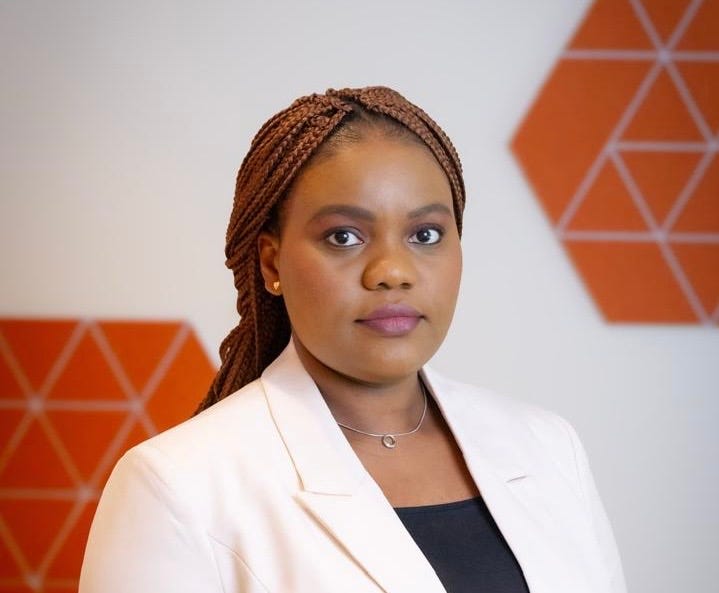
While global attention increasingly focuses on artificial intelligence developments in Silicon Valley and Asian tech capitals, a quieter revolution is unfolding in Nigeria’s financial services sector, driven by data scientists like Amarachi Echere whose innovations are reshaping how millions of Africans access and interact with banking services.
Echere’s current work in developing advanced machine learning systems demonstrates the capacity of Nigerian professionals to drive innovation at the highest levels of global finance. Her leadership in creating AI frameworks that have reduced default risk substantially while accelerating document review processes illustrates how technical expertise developed in African markets translates to international contexts with measurable impact.
Industry observers note that professionals who have navigated Nigeria’s unique challenges, limited infrastructure, complex regulatory environments, diverse customer populations, often bring distinctive problem-solving capabilities that prove valuable across multiple markets.
“What distinguishes talent emerging from Nigeria’s technology sector is the ability to deliver results under constraint,” said Dr. Chinwe Onyeagoro, Director of the West African Institute for Digital Economy Research. “When you’ve built fraud detection systems that must operate across inconsistent connectivity, or credit models that work with limited formal data, you develop adaptive capabilities that prove valuable in any context.”
Echere’s development of alternative-data credit scoring models addressed one of the most persistent barriers to financial inclusion in Nigeria: the inability of traditional credit assessment methodologies to evaluate the majority of the population operating outside formal banking systems. By incorporating mobile money transaction patterns, utility payment histories, and social commerce behaviors, her models expanded lending access to previously excluded populations while maintaining risk discipline that protected institutional portfolios.
The significance extends beyond individual institutional impact. Central Bank of Nigeria officials have referenced similar alternative-data approaches in policy discussions around financial inclusion targets, suggesting that innovations pioneered by practitioners like Echere are informing regulatory thinking. Dr. Emeka Okafor, former advisor to the CBN on digital financial services, noted that successful private-sector implementations provide proof-of-concept that helps regulators assess feasibility and design appropriate frameworks.
Echere’s fraud detection systems, which have saved financial institutions millions of naira annually, arrived as Nigerian banks faced escalating sophisticated attacks. Traditional rule-based detection systems struggled with evolving fraud patterns, creating openings for substantial losses. Machine learning approaches that continuously adapt to new threat signatures have proven more resilient, though implementing such systems requires both technical sophistication and deep understanding of local fraud typologies.
The payment optimization work Echere conducted has particular relevance for Nigeria’s ongoing transition toward cashless transactions. Payment failures represent more than technical annoyances in markets where digital payments increasingly enable basic commerce. Improvements in transaction success rates directly translate to merchant confidence and consumer adoption, critical factors in accelerating the shift from cash-dependent to digitally-enabled commerce.
Beyond immediate applications, Echere’s methodologies have influenced how Nigerian financial institutions approach data infrastructure more broadly. Her implementations of enterprise data lakes that transform multi-day analytical cycles into near-real-time insights have been studied and adapted by organizations seeking to modernize their data management capabilities. The architectural principles, treating data as strategic asset, building for scalability, enabling self-service analytics, reflect global best practices applied within Nigerian operational contexts.
Echere’s involvement as a judge for the Central Bank of Nigeria’s eNaira Hackathon, where she evaluated solutions from thousands of participants focused on financial inclusion and borderless payments, demonstrates her influence on national digital currency strategy and fintech policy development. Her participation in such high-profile initiatives positions her insights at the intersection of technical innovation and regulatory evolution.
Professor Olufunmilayo Arewa, who researches technology and development at Lagos Business School, notes that professionals like Echere represent a new model of technical leadership. “We’re seeing data scientists who move fluidly between contexts, bringing insights from each environment to inform the other,” Arewa explained. “Someone working on global financial systems while staying engaged with African fintech challenges can create impact that wouldn’t be possible from remaining exclusively in either context.”
The challenge lies in ensuring that global engagement translates to domestic capacity building. Echere’s mentorship of emerging Nigerian data scientists and her continued participation in local innovation communities suggest active investment in knowledge transfer. Her frameworks and methodologies, tested across different institutional contexts, provide templates that other practitioners can adapt and extend.
Her work, from alternative-data credit models expanding financial access to fraud detection systems protecting institutional assets to enterprise analytics infrastructure enabling real-time decision-making, illustrates how data science expertise developed in one of Africa’s most dynamic markets creates value that resonates far beyond initial applications. The technical capabilities, innovative approaches to persistent challenges, and ability to deliver measurable impact demonstrate that Nigerian talent continues to shape the evolution of financial technology both locally and internationally.
WATCH TOP VIDEOS FROM NIGERIAN TRIBUNE TV
- Relationship Hangout: Public vs Private Proposals – Which Truly Wins in Love?
- “No” Is a Complete Sentence: Why You Should Stop Feeling Guilty
- Relationship Hangout: Friendship Talk 2025 – How to Be a Good Friend & Big Questions on Friendship
- Police Overpower Armed Robbers in Ibadan After Fierce Struggle


