KUNLE ODEREMI examines the raging national discourse, especially the proposal for the creation for more states. Against the agitation of many other critical stakeholders for proper restructuring of the country to correctly reflect its federal nature and allow effective administration, he asks which of the options: restructuring or creation of more states would take Nigeria out of its protracted political and socio-economic dungeon.
What Does Nigeria need?
THE 10th National Assembly has promised to give the country a new constitution in December this year. It is not the first time that the NASS will be whetting the appetite of the proponents for a new constitution that will guarantee the genuine and altruistic expectations and aspirations about their country. Wide ranging economic, fiscal and financial reforms are part of the fresh initiatives by the Executive and the Legislature as well as collaboration with other critical stakeholders in the quest to amend the questions.
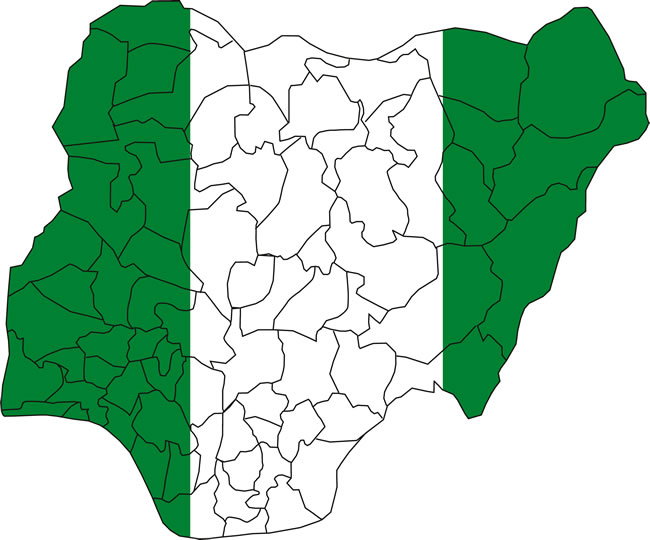
While the debate over the four tax reform bills initiated by the Executive has ebbed, discourse on the appropriateness or otherwise of more than 30 additional states has returned to the front burner. The issue has refused to die in spite of the sustained demand for restructuring, resource control, devolution of power. In returning the country to a familiar path, the deputy speaker of the House of Representatives, Honourable Benjamin Kalu confirmed receipt of 30 requests for new states across the six geopolitical zones in the country. The update is that the applicants have been given until March 5 to meet the conditions contained in the constitution on the creation of state. There is a semblance of mixed feelings over the surging requests for additional states from the existing 36-state structure, including the Federal Capital Territory (FCT) Abuja. One is the question about the age-long demand for restructuring of the country to reflect its ethno-religious, cultural and traditional diversity. Another teaser bothers on the devolution of powers as the power at the centre is not just awesome but also antithetical the principles of federalism. The third teaser has to do with the correlation of state creation more states to the demand for restructuring and power devolution in the bid to fix Nigeria and evolve a federation that reflects the collective will of the constituent ethnic nationalities. Which of the two or three distinct options can be in the overall interest of the citizens, and not a few elite that have appropriated state power and authority?
Section 8(i) of the 1999 Constitution (as amended), which deals with state creation, provides that “An Act of the National Assembly for the purpose of creating a new state shall only be passed if (a), A request supported by at least two-thirds majority of members (representing the area demanding the creation of the new state) in each of the following, namely (i) the Senate and the House of Representatives, (ii) The House of Assembly in respect of the area, and (iii) The local government councils in respect of the area, is received by the National Assembly.” It further states that: “(b) A proposal for the creation of the state is thereafter approved in a referendum by at least two-thirds majority of the people of the area where the demand for creation of the state originated; (c) The result of the referendum is then approved by a simple majority of all the states of the federation supported by a simple majority of members of the Houses of Assembly; and (d) The proposal is approved by a resolution passed by two-thirds majority of members of each House of the National Assembly.”
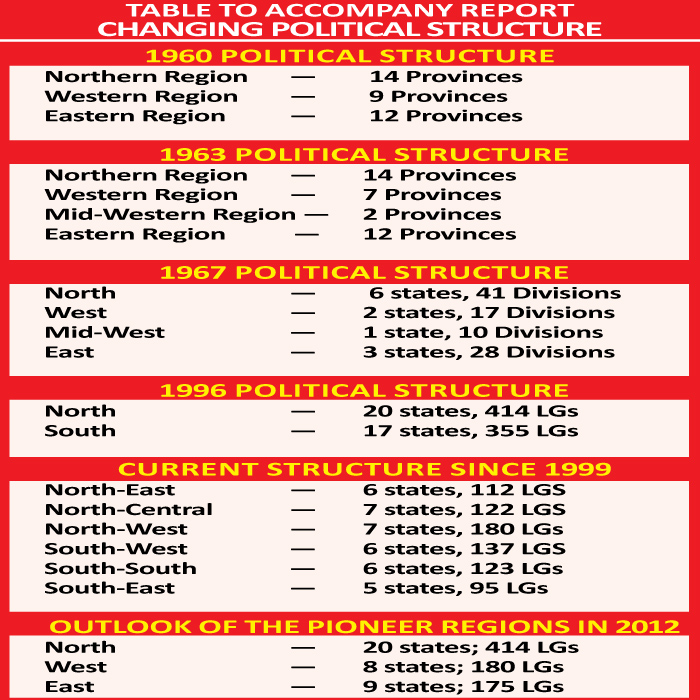
In clear terms, whereas the creation of states was by the military fiat, the exercise in a civilian dispensation is herculean and arduous, going by those constitutional grounds in Section 89 of the 1999 Constitution. It requires wide consultations and engagements with main stakeholders across Nigeria, as well as conduct of referendum and approval of at least 24 out of the 36 state Houses of Assembly in the country. The current 36-state structure emerged from the 1914 amalgamated Southern and Northern protectorates by the British colonialists. It later evolved as three regions: Northern Region, Eastern Region and Western Region. In 1963, the civilian regime created a fourth region, Midwestern, out of the Western Region. Then, the Northern Region had 14 provinces; Western Region (7 provinces), Midwestern (2) and Eastern Region (12). In essence, the North had one region and 14 provinces while the South had three regions and 21 provinces.
10th Assembly
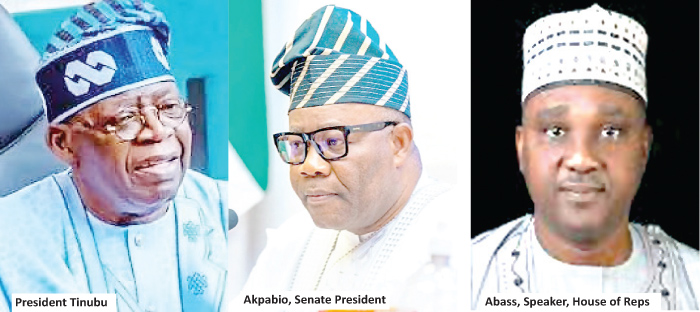
In the 10th NASS, the Senate constituted a 45-member committee for the review of the constitution with the deputy president of the Senate, Barau Jibrin, while the Senate Leader, Opeyemi Bamidele, is the deputy chairman. The senators representing their geopolitical zones in the committee are: Adamu Aliero (North-West); Orji Uzor Kalu (South-East) Francis Fadahunsi (South-West); Bomai Mohammed (North-West); Barinada Mpigi (South-south) and Umar Sadiq Sulaiman (North Central). The charge of the president of the Senate, Godswill Akpabio, to the committee is that, “There is a need for us to touch some aspects of the constitution to bring them in line with current realities.” To what extent the creation of states fall into that category? In the House of Representatives, there are said to be many constitution alteration bills that are at various stages of consideration, with the deputy Speaker and Chairman of the House Constitution Review Committee, Honourable Benjamin Kalu, as chairman. The deputy speaker was quoted to have said that the committee was fully aware of the concerns of Nigerians on the need to finalise and conclude discussions around Nigeria’s Constitution. Recall that more than 45 memoranda were received by the Seventh Assembly in 2012 for the creation of new states. The figures rose when similar moves were initiated in subsequent Assemblies.
Afe Babalola on creation of states
Seminal legal luminary, Aare Afe Babalola, has consistently given broad perspectives and illuminations on the issue state creation, the trajectories and consequences over the year. In one of such illuminations entitled: ‘Nigeria does not need the creation of new states’, he painstakingly shed light on the path that the country has passed on the matter and the consequent outcomes. He ventilated the view on the heels of a claim by the last Senate that no fewer than 20 requests had been made for the creation of more states, with the chamber saying it had passed the request to the Independent National Electoral Commission (INEC) in consonance with the provisions of Section 8 of the 1999 Constitution for the conduct of a referendum.
But the founder and president of the Afe Babalola University (ABUD) Ado-Ekiti, said that while the steps taken by the Senate in acknowledging its constitutional mandate to act in compliance with the provisions of Section 8 of the Constitution is commendable, he is not convince that the creation of more states was the socio-political issues in the country; and if anything, will certainly increase the cost of governance. He added that he was aware of the arguments of the advocates of new states, which he includes that governance will be brought closer to the people when a larger territory is sub-divided into a less-dense populace; address the bug of social, political, and economic marginalisation.
The legal luminary contended that the stakeholders must avoid alibi in making excuses over the predicament of Nigeria. He affirmed: “Notwithstanding the seeming genuineness of the protagonists’ arguments, one thing is clear, Nigeria has challenges associated with resource distribution and humongous cost of governance. Other challenges include poor infrastructure, ethnic divide, security issues, and failed governing institutions. The incentive for self-sustenance which was one of the factors birthing the creation of states woven around the nation’s ethnic divides is, unfortunately, no longer viable. For instance, the Northern states, once renowned for their groundnut exportation capabilities, and cow hide; as well as the Southern states once famous for the production of rubber, palm oil and diverse articles of clothing, have altogether abandoned these commercial endeavours in exchange for the ease of federal allocation. Presently, owing to the centralised resource control, each of the 36 states in Nigeria relies on federal allocation – and the fallout of this system is a phenomenal increase in the cost of governance from inadequate crude resources. In simpler terms, the limited resources from the federal government coffers are being used to fund the duplicative functions of thirty-six state governments and the Federal Capital Territory, ministries, legislative houses, parastatal agencies, and several others.” His submission is that. “In all, there is proliferation of governance, dissipation of limited resources, creation of avenues for systemic corruption and unnecessary bureaucracy, and the consistent failure of the federal government to actuate its target infrastructural development. Without any doubt, the idea for the addition of 20 more states to the existing 36 is one which can bring the nation’s economy to its knees as such would require more funding from the central government to sustain the cost of governance alone.”
Stakeholders speak: Ex-Speaker Abdullahi Bello
A former Speaker of the Kogi State House of Assembly, Honourable Abdullahi Bello, perceived the demand for additional states as a ruse because of other more germane issues facing the country. He said the priority of the nation now should be how to devolve power among the federating units. “Devolution of power is the best of our urgent need for now. State creation agitations are mere political tools that Parliamentarians are intentionally using for purposes of future campaigns. It’s obvious that a region such as the South-East is short-changed in matters of number of state. As desirable as it’s for the genuine consideration for the South-East, but getting the balance for them looks extremely difficult, as others are now clamouring for more states,” he stated. The former acting governor of Kogi further explained that the process of creating state under the 1999 Constitution is tedious and cumbersome unlike during the era of military dictatorship in Nigeria. According to Bello, “The constitutional bottleneck is there too. The huddle of getting the approval of the 2/3 of the State Houses of Assembly may be difficult. More so, there is the question of how financially viable are the present states? So, creating states that cannot offset most of their internal obligations shouldn’t be encouraged.”
A United States-based attorney and legal practitioner, Silas Owolabi, said Nigeria must set the right priority in the quest to reposition the country for nationhood, progress and prosperity. He said the issue of restructuring remains sacrosanct and should remain on the front burner. This he explained is because of the trajectory of Nigeria for decades now after the collapse of the First Republic, he stressed: “Restructuring should be the major priority among the issue of power devolution and state creation. We need an equitable system.”
The Patriots
Some elders statesmen and leaders of thought also ventilated their position on the demand for additional states, in spite of the challenges and history of state creation in the country. Acting under the aegis of The Patriots, the leaders restated their stand that creating new states should not take precedent in the quest to re-engineer the country to rediscover itself. The leaders, led by the chairman of the group, Chief Emeka Anyaoku visited President Bola Tinubu, in the advocacy for restructuring, said the country cannot afford to miss the current opportunity to restructure the country. Comrade Olawale Okunniyi, Secretary General of The Patriots. He gave the perspective of the organisation in the revelation by the Joint National Assembly joint committee on the amendment of the 1999 Constitution. “Well for us in the Patriots, democratic constitutional restructuring of Nigeria takes precedence over the creation of more States within the current warped federation of Nigeria. This is because it’s far more important for Nigeria to first create national political equilibrium and stability for the economic prosperity of the people of Nigeria as any State created under the present unitary system of Nigeria cannot be economically viable or prosperous except the country is first democratically reset for political equity and fairness in a balanced federation through a deliberate fundamental Constitutional political reform.”
The Leader of the Arewa Youth Consultative Forum, Comrade Yerima Shettima is among other personalities that are curious about what should be the list of utmost priority of stakeholders, given the missed opportunities Nigeria has recorded decades after becoming a sovereign state. He warned that the creation of states should not take precedent over restructuring and power devolution. Comrade Shettima said: “Understandably, Nigeria faces a critical juncture demanding a focused approach to its development. Two prominent proposals vying for national attention are restructuring with power devolution and the creation of more states. While both aim to improve governance and address regional disparities, one presents a more effective and sustainable path towards national progress.” Shettima sees the request for additional states as a short-sighted approach to addressing the core challenges besetting governance and representation in the political space. Apart from duplication of administrative and governance structures, infrastructure, among others, Shettima said new states constitutes a huge drain of scarce resources that ought to deployed in tackling problems in critical economic, educational sectors and skill manpower development. He declared: “The creation of more states, often fuelled by political expediency and regional demands for increased representation, presents a short-sighted approach. While ostensibly aimed at improving governance and bringing power closer to the people, the creation of new states often exacerbates existing problems. The newly created entities require significant financial investment in infrastructure, administration, and personnel. This diverts scarce resources from crucial sectors like education, healthcare, and economic development.” He submitted that, “Furthermore, the process can lead to further fragmentation, potentially deepening ethnic and religious divisions rather than fostering unity. The administrative burden increases, leading to bureaucratic inefficiencies and potentially hindering development efforts. The experience of previous state creations in Nigeria reveals a pattern of duplication of efforts and increased administrative costs without commensurate improvement in service delivery. This ultimately undermines the very goals it intends to achieve.”
Shettima said the existing structure needs retooling to guarantee equity, justice and fairness. Faulting the demand for new states when Nigeria is literally in a dire strait, he said: Restructuring, on the other hand, offers a far more comprehensive and sustainable solution. It involves a fundamental re-evaluation of the existing federal structure, aiming to redistribute power more effectively between the federal, state, and local government levels. This involves revisiting the constitutional framework to grant more autonomy to states, allowing them greater control over their resources and the ability to tailor policies to their specific needs and contexts. Effective power devolution enables states to better address local issues, fostering a sense of ownership and accountability among their citizens. For example, enhanced control over revenue generation can empower states to invest more strategically in education, infrastructure, and other critical areas based on their unique priorities.
“Restructuring addresses the core issue of unequal resource distribution and the perceived marginalization of certain regions. By devolving power and resources, restructuring can foster a more equitable distribution of wealth and opportunity across the country, potentially mitigating the tensions and conflicts that often arise from perceived imbalances. This fairer distribution can contribute to a stronger sense of national unity and belonging, essential for a stable and prosperous Nigeria. The key difference lies in the holistic approach of restructuring. It tackles the systemic issues underlying Nigeria’s challenges – unequal power distribution, resource control, and regional disparities – while the creation of more states merely offers a superficial solution, often masking the root causes of the problem. The focus on restructuring allows for a fundamental overhaul of the system, fostering good governance, improved service delivery, and a more equitable distribution of resources.”
Capacity of Existing States
The multiplicity of states has apparently thrust new set of power brokers and emboldened different sets of kingmakers within and in and outside the political arena and power prism. The exercise, according to scholars and other professionals, has equally reduced some ethnic groups to new minorities leaving them at the mercy of manipulators. All these have led to tensions and frustration along ethno-religious and cultural lines in some states due to marginalisation on state affairs. Thus, in 2013, the Senate said that no fewer than 45 requests for new states were received from different groups and organisations.
One recurring national discussion is the ability and capacity otherwise to perform their statutory functions and role to the citizens. From the era of bailout from the central government to special grants, the states have lived from hand to mouth, with many organisations lending credence to the weakness of many of the states. For instance, in December 2023, the Economic Confidential, a subsidiary of PR Nigeria, released a report on the viability of the 36-state structure in the country. The damning report listed only seven states: Lagos, Ogun, Rivers, Kaduna, Kwara, Oyo and Edo as the most viable states for 2022. The Assistant Editor of Economic Confidential, Zekeri Idakwo, explained that the report was based on the data obtained from the Nigerian Bureau of Statistics, and the Federal Account Allocation Committee (FAAC). He said: “The IGR of the 36 states of the federation totalled N1.8trn in 2022, which was above that of 2021, which was N1.76trn. The report further indicates that the IGR of Lagos State of N651bn is higher than that of 30 other states put together whose Internally Generated Revenues are extremely low and poor, compared to their allocations from the Federation Account. A total Internally Generated Revenue of N1.5trn from the seven most viable states in 2022, was almost twice the total IGR of 29 states together that merely generated about N650bn.” The report added that while Lagos received N370bn from FAAC, the state generated N651bn; Ogun received N113bn and generated N120.5bn; Rivers received N363.4bn and generated N172bn; Kaduna received N155bn in federal allocation, and generated N58bn; Kwara received N99bn and generated N35.7bn; Oyo got N181bn and generated N62bn; and Edo received N147bn in federal allocation, and generated N47.4bn. However, Bayelsa, Akwa Ibom and Katsina States, failed to generate up to 10% of the total allocations received from the Federal Government for 2022 and were declared insolvent states. The report claimed: “The six states that may not survive without the Federation Account due to their extremely poor internal revenue generation of less than 10% compared to their federal allocations are Bayelsa, Katsina and Akwa Ibom, the home states of former Presidents Goodluck Jonathan, Muhammadu Buhari, and the current Senate President Godswill Akpabio respectively. Others are Taraba, Yobe and Kebbi States.” Bayelsa was bottom of the list, having received N273bn and generating only N15.9bn, representing 5.81% of the allocations; Kebbi received N119bn and generated N9bn (7.67%); Katsina received N165bn and generated N13bn (7.90%); Akwa Ibom received N360bn and generated N34.8bn (9.66%); Taraba received N103bn and generated N10.2bn (9.91%); while Yobe received N105bn and generated N10.4bn (9.91%).
Basis for Clamour
A preponderance of stakeholders opines that there is inherent injustice in revenue allocation formula which benefits those states that seemingly lack ingenuity on the issue of leadership. States that generate or contribute little into the federation account get rewarded for inertia and the lack of resourcefulness and vision. Their backwardness, analysts say, is not for the states lacking in capacity to become viable but due to the failure of the leaders of those states in harnessing the enormous economic opportunities open to them to generate IGR. Therefore, the state creation has caused serious economic distortions and disequilibrium in all critical facets between the components of the North and those in the southern part of Nigeria. The imbalance, which manifests in the distribution of states and local government structure, the observers said, is the real source of instability in the convoluted Nigerian federation. There is a situation whereby a state was split into two, still gets more resources, because the federal allocation and other resources are distributed to states on the basis of 50% federal equality and 50% on population.
The Minority Question
In a paper published by the African Journal of Politics and Administrative Studies, with the title: Federalism and state creation In Nigeria, Joseph Okwesili Nkwede, of the Department of Political Science, Ebonyi State University, Abakaliki, affirmed that the Nigerian Federal structure constitutes a source of worry to many Nigerians, whereas federalism as a prescriptive ideology has an ancient pedigree. The scholar remarked that the agitation for additional states is sustained by the belief that development will obviously accompany state creation. But he said the logic was based a warped interpretation of development indices going by empirical evidence, over the years. He opined that the ordinary citizen has been hoodwinked that economic dimension alone constitutes development, whereas the “creation of states focuses on the distribution process to the neglect of the production aspects, militating against the mobilization of the creative energies of the population toward growth through the transformation of the productive forces of the society.”
Nkwede added that the argument advanced for the creation of states on political stability cannot be achieved without it is puerile. “A veritable question that comes to mind is, has political stability been guaranteed in spite of the increase from twelve to 36 states,” he queried? He asserted that when the people are not united, probably because of tribalism, statism, ethnic chauvinism and religious bigotry, and craze for power, political stability is wished away in such a country.
There is also the minority and political domination question which the protagonists of creation of states say could be redressed. Many observers claimed that those issues have not ebbed or paled into insignificance in spite of the creation of additional states over the years. According to the observers, the creation of states based on the minority problems has only resulted into a resurgence of requests for more states, with a few majority ethnic nationalities joining the fray.
More importantly is the correlation of state creation with the sharing of the proverbial national cake or common patrimony, distribution of other critical resources. The issue is further extended to the status of local government as the closest a level of government to the people with the assumption that new states will bring governance closer to the citizens at the grassroots, whereas state governors have removed whatever is left of the scrotum of the third level of government in the country. According to Nkwede, most of these arguments lack merit because, in spite of the creation of 36 states structure from two regions, Nigeria remains deficit in the indices of progressive development, bedecked by irresponsible and inefficient representation, particularly at state and local levels. He averred that the government white paper on Justice Ayo Irikefe panel of 1976 lamented that agitation for states led to bad governments. “Unarguably, the endless demands for more states should not be the only instrument of democratic government process in a federal system; rather an efficient and strict adherence to the democratic tenets and governance system that has the interest of the people in mind will be a better instrument for achieving this purpose,” he added.
The scholar aligned with the advocates of restructuring in order to move Nigeria from a state of perpetual flux but with a caveat of possible convocation of a sovereign national conference. His words: “It logically follows that the first step in our quest for a better federalism is to produce a peoples constitution that is truly deliberated upon, agreed to, and made by: ‘we the people” through a national conference and a national referendum, otherwise known as sovereign national conference. This is because the durability of a constitution necessarily depends on the extent to which the people have been involved in its making.” In his perception, evidence abound that the creation of states is more of a process of elite formation than a means of either ensuring even development or correcting regional imbalance, or even as a means of achieving national integration. He noted that the nexus between the creation of new states and the strengthening of the elites is so clear that in the present Fourth Republic of Nigeria (1999-date), there have been more than 40 movements for the creation of new states. He attributed the trend to the fact that the leaders of such movements, having failed to achieve their political objectives, resort to requesting for states, where if they are amenable, they could establish their own political kingdom for the maximum exploitation of the masses.
READ ALSO: PANDEF calls for balanced state creation across geopolitical zones
WATCH TOP VIDEOS FROM NIGERIAN TRIBUNE TV
- Relationship Hangout: Public vs Private Proposals – Which Truly Wins in Love?
- “No” Is a Complete Sentence: Why You Should Stop Feeling Guilty
- Relationship Hangout: Friendship Talk 2025 – How to Be a Good Friend & Big Questions on Friendship
- Police Overpower Armed Robbers in Ibadan After Fierce Struggle