
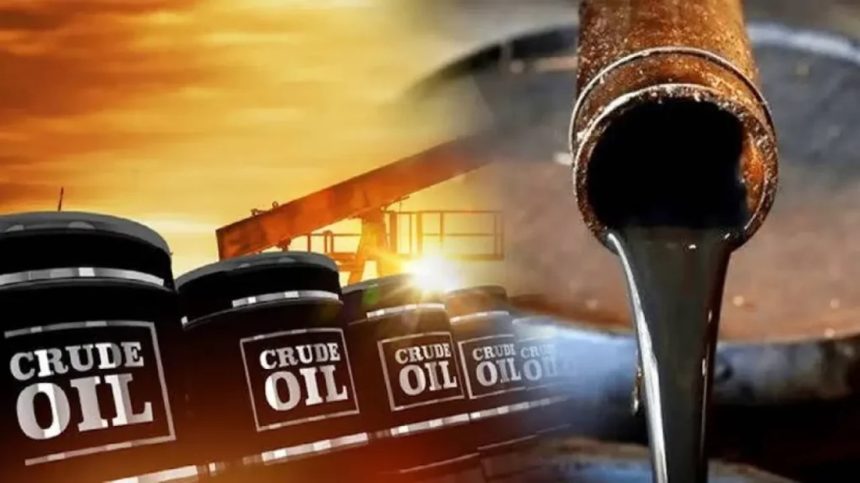
Global crude oil prices extended their decline on Wednesday as markets continued to react positively to the easing of tensions between the United States and Iran, erasing much of the geopolitical risk premium that had driven energy prices higher during the conflict.
According to market tracking data, international benchmark Brent Crude fell to $78.60 per barrel, while West Texas Intermediate dropped to $75.00 per barrel, marking their lowest levels in approximately three months.
The sharp decline follows reports of a breakthrough in diplomatic efforts aimed at ending hostilities in the Gulf region.
Investors have increasingly shifted focus from concerns over supply disruptions to expectations of a gradual normalisation of oil exports and shipping activities through the strategically important Strait of Hormuz.
According to Tribune Online report, US President Donald Trump claimed on Monday that ships have begun moving freely out of the Strait of Hormuz following Vice President JD Vance’s declaration of a digital agreement with Iran.
“Ships are starting to move, many loaded with oil, out of the Strait of Hormuz. They are traveling along the Southern Highway, which is totally safe, secure, and pristine. There are also other areas for travel!” Trump posted on Truth Social.
ALSO READ: There would be no Israel without me — Trump
Meanwhile, at the height of the Middle East crisis, Brent crude had surged to around $106 per barrel amid fears that the closure of the Strait of Hormuz could significantly disrupt global energy supplies. Since signs of a peace agreement emerged, Brent has shed more than 25 per cent of its value, falling below the $80 mark.
Similarly, WTI crude, which traded near $91 per barrel during the peak of the tensions, has fallen by roughly 17.5 per cent as traders unwind positions built around concerns of prolonged supply shortages.
Market sentiment received an additional boost after reports that the United States and Iran had agreed on a framework for a peace arrangement that could pave the way for the reopening of the Strait of Hormuz. The waterway is one of the world’s most critical oil transit routes, handling a significant share of global crude exports.
Industry analysts note that while financial markets have reacted swiftly, physical oil inventories and supply chains may take several months to fully recover.
However, expectations that shipping operations and production levels across the Gulf region will gradually return to normal have reduced fears of a prolonged energy crisis.
Despite the recent price correction, analysts caution that oil markets remain sensitive to geopolitical developments. Any setback in negotiations or renewed tensions could trigger fresh volatility in global energy prices.
WATCH TOP VIDEOS FROM NIGERIAN TRIBUNE TV
- Relationship Hangout: Public vs Private Proposals – Which Truly Wins in Love?
- “No” Is a Complete Sentence: Why You Should Stop Feeling Guilty
- Relationship Hangout: Friendship Talk 2025 – How to Be a Good Friend & Big Questions on Friendship
- Police Overpower Armed Robbers in Ibadan After Fierce Struggle


