
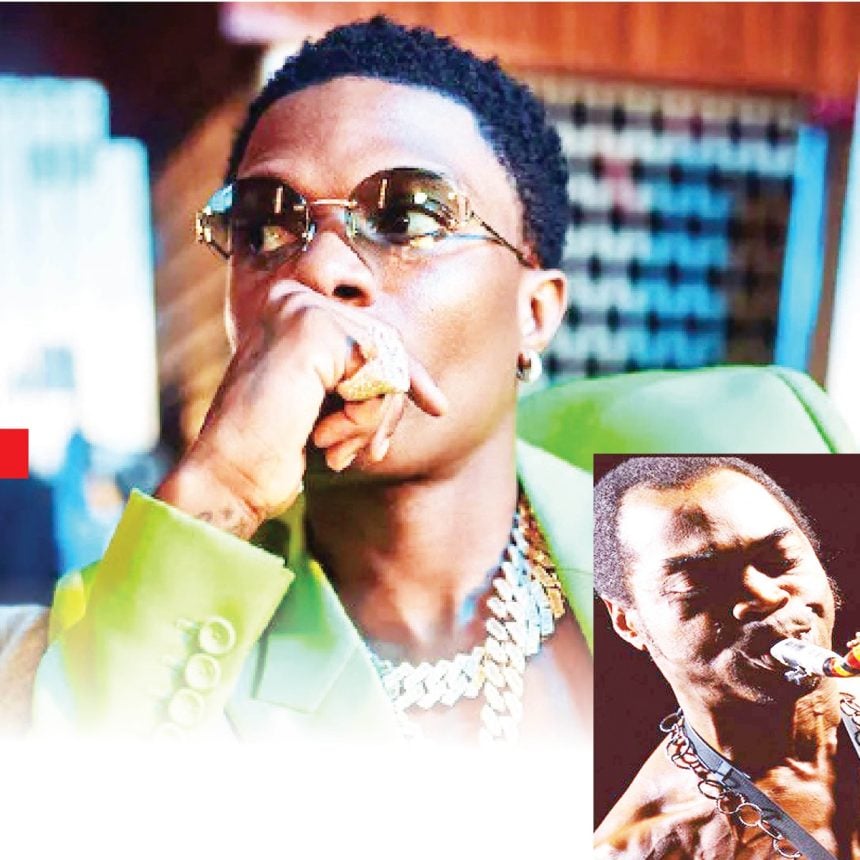
The recent face-off between Wizkid and Seun Kuti, son of Afrobeat legend Fela Anikulapo Kuti, has once again put the spotlight on the singer’s fervent fan base, Wizkid FC.
The online clash erupted after Seun criticised Wizkid’s claim of being the biggest Afrobeat star post-Fela, prompting a barrage of insults and threats from the singer’s army of digital supporters.
Wizkid FC, the notorious fan group, immediately mobilised to defend their idol. Known for their aggression and relentlessness, the group has developed a reputation for silencing critics, disparaging rivals, and shutting down anyone perceived to be attacking Wizkid. Observers note that the fan army has become a digital extension of the artist himself, acting with little regard for moderation.
The group has grown into one of the most feared and controversial fan groups in the Nigerian music industry.
Known for their relentless defense of the artiste, these “keyboard warriors” are quick to launch personal attacks against anyone perceived to be undermining their principal, often sparking heated online feuds.
The origin of Wizkid FC can be traced back to the early days of Wizkid’s rise to fame. As the singer gained recognition with hits like Holla at Your Boy and Tease Me/Bad Guys, a devoted fan base coalesced around him. Initially a passionate community of supporters, the group has evolved into a digital army whose influence stretches far beyond ordinary fan engagement.
Their loyalty is fierce, bordering on aggressiveness. Many industry stakeholders, including fellow artistes, promoters, and media personalities, have publicly admitted they fear crossing the group.
Wizkid FC is known to swiftly attack anyone who criticises their idol, with little regard for the accuracy of claims or the consequences of online harassment.
The group’s tactics often extend to disparaging anyone who voices opinions against Wizkid or any individual or collective perceived to be opposing him.
Journalists, artistes, and even fellow fans of other musicians have occasionally found themselves in the crosshairs of this fervent digital militia.
While their intensity has cemented Wizkid’s public image, it has also raised questions about the impact of such blind loyalty on discourse within the Nigerian entertainment industry.
Critics argue that the unchecked power of fan armies like Wizkid FC contributes to a culture where criticism is silenced, and accountability becomes difficult.
Is Wizkid the biggest after Fela?
Despite the claims of being the biggest Afrobeat artiste after Fela Kuti, Wizkid’s career in recent years has not seen a chart-dominating hit on the scale of his 2019 duet with Tems on Essence, which gained international acclaim. The track remains a defining moment, yet for many, it is a highlight that he has struggled to surpass in the years since.
Wizkid’s 2020 album ‘Made in Lagos’ was widely praised for its quality and artistry, showcasing his signature Afrobeats fusion and collaborative ingenuity. However, some critics argue that while the album was musically strong, it did not produce the same commercial dominance as his earlier works.
His 2024 album More Love, Less Ego (Morayo) similarly demonstrated his creative versatility, but the project did not replicate the mass-market success expected of an artiste of his stature. Several of his international tours during this period were reportedly cancelled due to poor ticket sales, a situation that drew industry scrutiny and fuelled online debates about his declining pull.
Adding to the personal challenges in his life, Wizkid suffered the loss of his mother, a tragedy that has reportedly affected him deeply. Observers note that the star sometimes appears to inhabit a world where few people around him seem to matter beyond his inner circle and his ever-watchful fan army.
Yet, it would be unfair to overlook Wizkid’s musical ingenuity. Over the years, he has consistently delivered hits like Ojuelegba, Joro, Fever, and Ginger featuring Burna Boy. His ability to blend Afrobeats with global sounds has earned him international recognition and cemented his reputation as a creative force.
Still, the combination of unwavering fan support and public adoration has, according to critics, contributed to a perception of invincibility that some warn could be dangerous. High-profile voices, including Charly Boy, Dede Mabiaku, and Senator Shehu Sani have publicly cautioned Wizkid to tread carefully, especially as online rivalries and fan-driven controversies continue to escalate.
The influence of Wizkid FC has also raised questions about the power dynamics between artistes and their fan bases in Nigeria. With an army capable of shaping narratives, attacking critics, and amplifying support, the relationship between artist and fan has taken on an unprecedented intensity, often blurring the lines between personal defense and mob-like behaviour.
In many ways, Wizkid’s public persona is inseparable from the digital guardianship of his fan base. While the loyalty of Wizkid FC has shielded him from criticism, it has also created an echo chamber where dissenting voices are rarely entertained, and scrutiny is deflected by sheer fan force.
READ ALSO: I’m not trying to be like Fela —Wizkid
Why Fela remains the greatest!
Fela Anikulapo Kuti remains undisputed as one of the greatest musical icons Africa has ever produced. Over his lifetime, he released 52 albums, a staggering feat achieved without the aid of social media, streaming platforms, or the global distribution networks that artists rely on today.
Each record is a testament to his vision, creativity, and unwavering dedication to his craft, proving that his influence was built purely on talent, innovation, and relentless work ethic.
Beyond his musical genius, Fela used his art as a powerful tool for social commentary. Through Afrobeat, he spoke truth to power, fearlessly addressing political corruption, social injustice, and systemic oppression in Nigeria and beyond.
His struggles with successive governments, including repeated arrests, raids, and public vilification, only amplified the impact of his music.
Despite dying 28 years ago, Fela’s voice continues to resonate globally, his albums and messages remaining timeless, influential, and deeply relevant.
Seun highlighted how modern Afrobeat stars, including Wizkid, owe much of their platform to the foundations laid by his father.
WATCH TOP VIDEOS FROM NIGERIAN TRIBUNE TV
- Relationship Hangout: Public vs Private Proposals – Which Truly Wins in Love?
- “No” Is a Complete Sentence: Why You Should Stop Feeling Guilty
- Relationship Hangout: Friendship Talk 2025 – How to Be a Good Friend & Big Questions on Friendship
- Police Overpower Armed Robbers in Ibadan After Fierce Struggle


