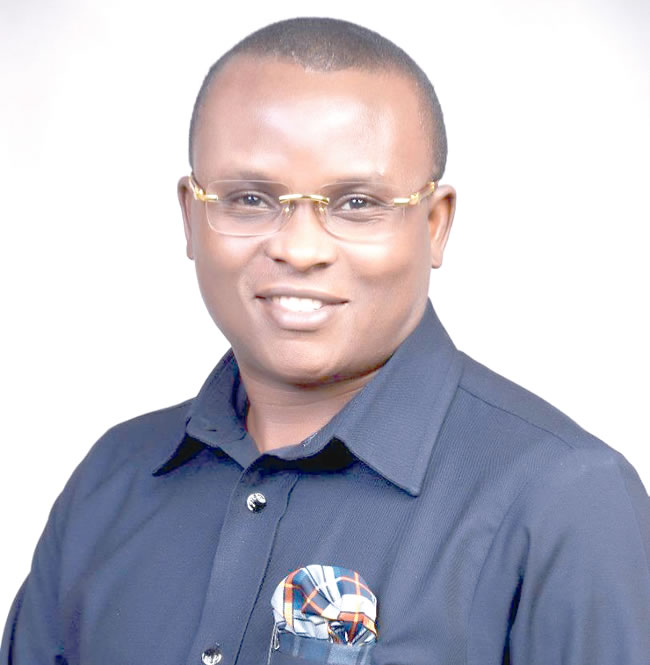
Migration, an ancient human phenomenon, has continually shaped societies and economies across the globe. It reflects humanity’s enduring quest for better opportunities, safety and a more meaningful existence. However, migration, like most things in life, has two sides: regular and irregular. Dr Chibuzor Ephraim Onyema, founder/President of Blacks Ancestral Native Communities (BANC) Foundation and a leading advocate for responsible migration, emphasised this dichotomy during a media chat with
CHRISTIAN APPOLOS, calling for comprehensive solutions that address the root causes of this global crisis.
DR Chibuzor Onyema’s insights shed light on the complex challenges posed by irregular migration, particularly as it affects many African youths. According to him, migration, in its essence, is as old as humanity itself. Whether driven by the search for better opportunities, safety, or simply the pursuit of a more fulfilling life, people have continuously moved from one region to another throughout history.
Migration, as many experts and advocates affirm, has undeniably played a central role in shaping the global landscape, influencing economies, cultures and communities.
However, migration, like many aspects of life, has two sides. “As a psychologist, I recognise that almost everything has two sides: like good and bad, light and dark, normal and abnormal, positive stress (eustress) and negative stress (distress),”explained Dr Onyema.
He went further to outline the dual nature of migration: regular and irregular, stressing the urgent need to address the dangers posed by the latter.
On regular migration, Dr Onyema explained that it occurs through legal channels, involving proper documentation and adherence to the immigration laws of destination countries. Irregular migration, on the other hand, involves individuals moving outside these lawful pathways; often without proper documents, overstaying visas, or undertaking perilous journeys to reach foreign shores.
“It is not migration itself that is harmful,” Dr Onyema remarked, “Migration has driven economic growth, strengthened communities and enriched cultures worldwide.” The problem, he emphasised, lies in the increasing prevalence of irregular migration, a practice that exposes migrants to severe risks such as exploitation, trafficking and even death.
The human cost of irregular migration
Speaking about irregular migration, Dr Onyema noted that particularly in Africa, it is frequently driven by desperation and hope. In recent years, Nigeria and several other African nations have seen a surge in irregular migration as thousands of young men and women, eager for a better life, embark on treacherous journeys across the Sahara Desert or the Mediterranean Sea in search of opportunities in Europe or other developed regions. For many, these journeys end in tragedy.
“Tragically, for many, these journeys end in disaster,” said Dr Onyema. He recounted numerous heart-wrenching stories of young Africans who have fallen victim to human trafficking, modern slavery and other forms of exploitation. “Many are sold into slavery or forced into prostitution,” he continued, referring to the harrowing account of a young Nigerian woman he featured in his book, ‘The Japa Conundrum: Socio-Economic & Psychological Considerations.’
One of the most distressing aspects of irregular migration, according to Dr Onyema, is the untold suffering of families left behind. “Parents are often left in a state of confusion and anguish, believing their children are alive and working hard to send money home, while in reality, their loved ones may have perished at sea or been exploited in unimaginable ways.”
For these families, the dreams of a better future for their children quickly turn into a cycle of hope and despair. The Mediterranean Sea, once seen as a pathway to opportunity, has become a graveyard for countless migrants whose dreams were lost to the deep blue waters. The imagery of young lives cut short in their pursuit of a better life haunts families across Africa, highlighting the high human cost of irregular migration.
Global response and local initiatives
Despite the grim statistics surrounding irregular migration, there is a growing global movement aimed at addressing the crisis. International organisations such as the International Organisation for Migration (IOM) and the International Labour Organisation (ILO) are at the forefront of these efforts.
These bodies work diligently to raise awareness of the dangers of irregular migration and support voluntary returns for migrants trapped in precarious situations abroad.
At the national level, agencies like the Nigerians in Diaspora Commission (NiDCOM) and the National Agency for the Prohibition of Trafficking in Persons (NAPTIP) have also made commendable strides.
These organisations are actively involved in combating human trafficking, promoting safe migration and providing reintegration support for returning migrants. They also work to prosecute traffickers and dismantle networks that facilitate irregular migration, Dr Onyema noted.
However, despite these efforts, Dr Onyema stressed that much more need to be done to tackle the root causes of irregular migration. “The push factors are clear: poverty, unemployment, lack of access to quality education, political instability and insecurity,” he noted. Addressing these systemic issues is essential for reducing the appeal of irregular migration and creating sustainable solutions.
Dr Onyema believes that governments and leaders must prioritise youth empowerment and economic development. “Investing in education, job creation, infrastructure and entrepreneurship is vital,” he urged, emphasising that providing viable alternatives to irregular migration should be at the forefront of national agendas. Empowering the youth to stay in their home countries by offering them tangible opportunities is a crucial first step.
BANC Foundation’s intervention: The STARCARE programme
In response to the growing crisis, the Blacks Ancestral Native Communities (BANC) Foundation has launched a comprehensive programme named STARCARE – an initiative that stands for Sensitisation, Training, Advocacy, Rehabilitation, Campaigns, Advisory, Reintegration and Empowerment. “Each element of STARCARE holds equal importance, reflecting our core values of Brotherhood, Advocacy, Networking and Congruence (BANC),” Dr Onyema explained during the interview.
A key feature of the STARCARE programme is the establishment of the Irregular Migration Mitigation Skills and Resource Centre (IMMSaRC). This innovative centre aims to provide globally recognised training for skilled workers and artisans, equipping them with the qualifications needed for employment both at home and abroad.
“IMMSaRC is not just about education; it is about creating sustainable livelihoods,” Dr Onyema remarked. The focus is not just on training but also ensuring that the training translates into tangible employment opportunities.
The initiative is grounded in the belief that by offering young people meaningful opportunities within their own countries, the lure of irregular migration can be diminished. Empowering youth with skills and knowledge is seen as a critical step in preventing future tragedies and building stronger, more resilient communities.
Raising awareness and international collaboration
A crucial aspect of preventing irregular migration is ensuring that individuals are well-informed about the dangers of taking illegal routes. Dr Onyema underscored the importance of comprehensive awareness campaigns, which must be scaled up to reach even the most remote communities. “Young people need to know that while the promise of a better life in a foreign land is tempting, the risks far outweigh the rewards,” he stressed.
In addition to awareness, Dr Onyema highlighted the need for international collaboration. Countries that are popular destinations for migrants, particularly in Europe, have a responsibility to provide safer, more transparent migration pathways. This would not only reduce the reliance on dangerous, irregular routes but also curb the activities of human traffickers and criminal syndicates.
These countries should collaborate with African governments in designing policies that facilitate legal migration and offer employment visas in critical sectors, easing the pressure for irregular migration.
As an example of potential international solutions, Dr Onyema referenced a report by a national daily regarding Sweden’s initiative to offer financial incentives to immigrants willing to return to their home countries.
While this proposal may not appeal to all, it represents a step in the right direction towards addressing the complex realities of irregular migration. Incentive-based return programmes, when paired with reintegration support, can help curb irregular migration while ensuring the safety and dignity of returning migrants.
A call for unity and action
Dr Onyema made an impassioned plea for unity in the fight against irregular migration, saying, “We must do everything in our power to prevent our youth from embarking on perilous journeys that endanger their lives.”
The path forward, he believes, lies in a collective commitment to creating economic opportunities at home, increasing awareness and fostering international cooperation to protect vulnerable migrants.
The message is clear: migration, when pursued through the proper channels, can unlock new opportunities. But when done the wrong way, it can have irreversible consequences.
Dr Onyema and the BANC Foundation are determined to work with governments, international organisations and communities to ensure that the next generation of Nigerians and Africans can pursue their dreams safely, whether at home or abroad.
“Above all,” Dr Onyema concluded, “we must remain united in our commitment to ensuring that the next generation has the support, knowledge and opportunities they need to thrive without risking their lives.”
READ ALSO: Lagos: Man kills neighbor, son over sanitation dispute
WATCH TOP VIDEOS FROM NIGERIAN TRIBUNE TV
- Relationship Hangout: Public vs Private Proposals – Which Truly Wins in Love?
- “No” Is a Complete Sentence: Why You Should Stop Feeling Guilty
- Relationship Hangout: Friendship Talk 2025 – How to Be a Good Friend & Big Questions on Friendship
- Police Overpower Armed Robbers in Ibadan After Fierce Struggle