As investors, trying to build lasting wealth in Nigeria can be daunting. Oftentimes, it comes with the hardest question of where and where not to invest, and how to avoid putting too much money into one type of asset. Real estate has long been a favorite because Nigerians understand property ownership, rental income and land appreciation.
- Real estate offers tangible assets and multiple ways to make money
- Agriculture can offer attractive opportunities, but the business risk is real
- The headline ROI can be dangerously misleading
- Real estate may suit investors seeking longer-term wealth accumulation
- Agriculture can turn capital faster, but losses can come faster too
- Turnkey does not mean risk-free
- Diversification works when the risks are actually different
- So, which investment is better?
Agriculture, meanwhile, is attracting attention from investors looking beyond traditional property and seeking exposure to food production, processing and other parts of the agribusiness value chain.
That makes the real estate and agriculture investment Nigeria debate more complicated than simply asking which one pays more. The better question is: which investment matches your capital, time horizon, tolerance for risk, liquidity needs and ability to manage unexpected losses?
Undoubtedly, both sectors have genuine opportunities, but neither comes with guaranteed returns. Real estate can suffer from vacancies, maintenance costs and weak demand in the wrong location. Agriculture can be hit by weather, disease, input costs, security problems, and unstable commodity prices. The difference is how those risks affect your money and how quickly you can recover from them.
Real estate offers tangible assets and multiple ways to make money
Property has a psychological advantage that many investments do not. It is something you can see, visit, and establish ownership through documentation. A commercial building, apartment, warehouse, or other income-producing property can generate rental income while potentially increasing in value over time.
Nigeria’s real estate market continues to benefit from substantial underlying demand. PwC’s 2026 Nigeria Economic Outlook says population growth, urbanization and continued residential and commercial development are supporting the sector, while the country’s housing deficit remains a major demand driver.
Similarly, Knight Frank’s 2026/27 Africa Report identifies strong underlying residential demand in Nigeria, although affordability remains a major constraint.
However, investors need to look beyond the selling price and advertised rent. Suppose you purchase a commercial property for ₦100 million and receive ₦8 million in annual rent. That produces an 8% gross rental yield, but it is not your actual return.
If vacancy, maintenance, insurance, management and other operating costs consume ₦2 million, your net income falls to ₦6 million. Your net rental yield is therefore 6%, not 8%.
That distinction becomes crucial when comparing property with agricultural investments whose promoters may advertise projected profits without clearly explaining all expenses.
Agriculture can offer attractive opportunities, but the business risk is real
Agricultural investment covers a wide territory. You could invest directly in farmland, livestock, crops or aquaculture, or put money into processing, storage, logistics or a professionally managed farm.
Nigeria’s agricultural fundamentals are compelling. The Food and Agriculture Organisation (FAO) stated that agriculture contributed about 28% of GDP between 2021 and 2024 and employed roughly 40% of the country’s labor force. Yet the organization also identifies serious structural constraints, including limited irrigation, climate change, high production costs, inadequate financing, weak input distribution, post-harvest losses and poor market access.
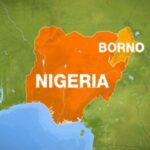
Those risks are not theoretical. In July 2026, FAO reported that projected climate shocks were expected to undermine agricultural production in parts of northeast Nigeria, while insecurity and economic pressures were disrupting livelihoods and markets.
This is why a seemingly impressive agricultural return deserves scrutiny. If a farm promises a 25% return, the investor should ask how that figure was calculated, whether it is guaranteed or projected, what happens if yields fall, who bears losses and whether insurance covers the relevant risks.
ALSO READ : Real estate firm holds press briefing ahead of Abuja estate groundbreaking
The headline ROI can be dangerously misleading
Imagine putting N20 million into an agricultural project that promises N5 million in profit after one production cycle. The simple calculation gives you a 25% return: N5 million ÷ N20 million × 100 = 25%
But if that production cycle lasts 18 months, the investment cannot be compared directly with an asset generating income every month or every year. You also need to establish whether the ₦5 million is genuine net profit after labor, inputs, transportation, management fees, insurance, taxes, storage, marketing and expected losses.
The same principle applies to property. A real estate investor should calculate net rental income rather than relying on gross rent or an expected future selling price.
The meaningful comparison is therefore net ROI over time, not the largest percentage printed in an investment brochure.
Real estate may suit investors seeking longer-term wealth accumulation
Property can be attractive for investors who are willing to lock away capital for years. A well-located asset can provide rental income while giving the owner exposure to long-term appreciation.
But location is everything. Knight Frank’s latest Nigeria analysis showed that residential demand remains strong but increasingly sensitive to affordability. It also notes that tenants are becoming more cost-conscious and that demand is shifting toward smaller and more efficient units in some markets. In commercial property, occupier demand, building quality and location are similarly important.
So buying any property simply because “land always appreciates” is not an investment strategy. An expensive building in a location with weak demand can produce disappointing returns, while a less glamorous asset serving a strong commercial or residential market may perform considerably better.
Property also has a liquidity problem. If you urgently need ₦50 million, you cannot necessarily sell half of a building tomorrow at the price you want. Transaction costs, documentation, valuation and finding a suitable buyer can all extend the exit period.
Agriculture can turn capital faster, but losses can come faster too
Agriculture’s major attraction is the possibility of shorter production cycles. Depending on the enterprise, an investor may be able to put capital into production, harvest, sell and reinvest within a relatively short period.
That creates an opportunity for capital to circulate more quickly than it might in conventional property.
But the same characteristic increases exposure to operating risk. A failed crop, livestock disease, extreme weather event, security problem or sudden change in market prices can affect an entire production cycle.
FAO’s current assessment of Nigeria highlights these vulnerabilities, while its agricultural investment work identifies significant opportunities in value chains such as cassava, maize and tomato alongside challenges involving inputs, processing and post-harvest losses.
Turnkey does not mean risk-free
A professionally managed agricultural franchise or turnkey farm can appeal to investors who lack the expertise or time to run agricultural operations themselves. The operator handles production while the investor provides capital.
That arrangement can be useful, but it creates another layer of risk: management.
Before committing money, investigate who operates the project, how long they have been in business, whether financial statements or production records are available, how investors are paid, what happens when production fails and whether there is insurance.
Also verify the underlying assets. If the investment involves farmland, determine who owns the land, what rights the operator has and whether the relevant documentation is valid.
Diversification works when the risks are actually different
An investor who already owns several residential properties may not gain much diversification by buying another apartment in the same city. Their wealth remains heavily exposed to property prices, rental demand, interest rates, regulation and local economic conditions.
Agriculture can introduce a different set of risks: climate, biological production, commodity markets, input prices and agricultural management.
The reverse is also true. Someone whose portfolio is already concentrated in farms and agribusinesses could potentially reduce concentration by adding property or another asset class.
So, which investment is better?
Real estate may be more suitable for an investor who prioritizes tangible assets, rental income and long-term appreciation and can tolerate relatively low liquidity. Agriculture may appeal more to someone seeking exposure to productive businesses and potentially shorter capital cycles while accepting greater operating and environmental risks.
The smartest decision begins with mathematics rather than excitement. Calculate the full capital requirement, expected net income, realistic downside, investment period, taxes, management costs and exit options. Then compare the result with what you could earn from alternative investments carrying a similar level of risk.
Nigeria has substantial opportunities in both property and agriculture, but opportunities still require due diligence. PwC expects real estate demand to remain strong in 2026, while FAO continues to identify significant investment potential in agricultural value chains alongside substantial structural risks.
For an investor building generational wealth, the answer may ultimately be neither real estate nor agriculture alone. A carefully diversified portfolio can allow property to provide one source of income and wealth preservation while productive agricultural investments provide exposure to another part of the economy.
WATCH TOP VIDEOS FROM NIGERIAN TRIBUNE TV
- Relationship Hangout: Public vs Private Proposals – Which Truly Wins in Love?
- “No” Is a Complete Sentence: Why You Should Stop Feeling Guilty
- Relationship Hangout: Friendship Talk 2025 – How to Be a Good Friend & Big Questions on Friendship
- Police Overpower Armed Robbers in Ibadan After Fierce Struggle