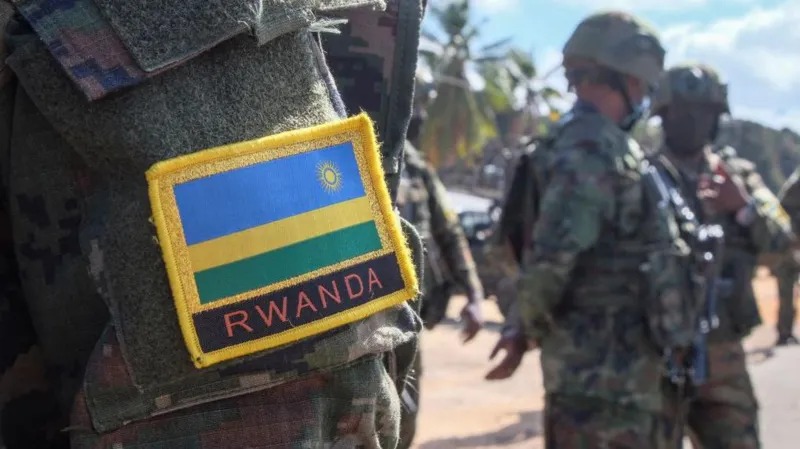
The United States has imposed sanctions on the Rwandan army and four of its senior commanders, accusing them of fuelling the conflict in neighbouring Democratic Republic of the Congo.
The move comes despite a US-brokered peace agreement signed in December between the governments of DR Congo and Rwanda to end the long-running violence in eastern Congo.
The US Treasury Department said the Rwandan army had undermined the peace deal by training, equipping, and fighting alongside the M23 rebel group.
ALSO READ: UK visa updates 2026: New rules for dependents
Rwanda rejected the allegations, saying the sanctions unfairly targeted one side and “misrepresent the reality and distort the facts of the conflict”.
Kigali has consistently denied backing the M23, insisting its military presence in the region is a defensive response to threats from armed groups operating in DR Congo.
The sanctions were announced three months after Congolese President Félix Tshisekedi and Rwandan President Paul Kagame signed the Washington Accords aimed at ending hostilities. The ceremony was hosted by United States President Donald Trump, who described the signing as “historic” and expressed hope it would bring lasting peace.
Although the M23 rebels were not signatories to the deal, they have been involved in a parallel peace process led by Qatar, a US ally with close ties to Rwanda.
Days after the Washington agreement, the M23 seized the strategic city of Uvira near the Burundi border, forcing thousands to flee before withdrawing under pressure from Washington.
However, the Treasury Department warned on Monday that the group’s continued presence near Burundi’s border “carries the risk of escalating the conflict into a broader regional war”.
It said the rebels’ offensives would not have been possible without the “the active support and complicity” of the Rwanda Defence Force (RDF) and senior officials.
“The RDF has introduced advanced military equipment to the battlefield in eastern DRC, including GPS jamming systems, air defense equipment, drones, and additional materiel,” the statement said.
According to the department, thousands of Rwandan troops were deployed across eastern DR Congo “where they actively engage in combat operations and facilitate M23’s control of territory”.
Treasury Secretary Scott Bessent said Washington expected “the immediate withdrawal of Rwanda Defence Force troops, weapons, and equipment”.
In a separate statement, US State Department spokesman Tommy Pigott said the M23 was “responsible for horrific human rights abuses, including summary executions and violence against civilians, including women and children”.
The sanctioned officials include army chief of staff Vincent Nyakarundi; Ruki Karusisi, commander of the 5th Infantry Division; Mubarakh Muganga, Rwanda’s chief of defence staff; and Stanislas Gashugi, head of special operations.
Under the sanctions, any assets held in the US by the RDF or the four officers will be frozen, and US individuals and entities are barred from engaging in financial transactions with them.
Responding to the measures, Kigali accused DR Congo of breaching ceasefire arrangements through “consistent and indiscriminate drone attacks and ground offensives,” which it said, “continue to cost many lives”.
Rwanda also accused the Congolese government of working with ethnic militias and mercenaries.
“Protecting our country is a badge of honour which the Rwanda Defence Force carries very proudly,” it added.
The Congolese government welcomed the sanctions, expressing its “deep appreciation” to Washington and describing the move as “a clear signal of support” for the respect of its “sovereignty and territorial integrity”.
The Trump administration said it was “prepared to use all available tools” to ensure both Rwanda and DR Congo honour their commitments.
Trump previously said the December agreement would also help secure access to critical minerals in eastern DR Congo, which holds significant reserves of copper and cobalt used in batteries for mobile phones and electric vehicles.
Eastern DR Congo has been plagued by violence for more than three decades, dating back to the 1994 Rwandan genocide. Since then, numerous armed groups have competed for influence and control of the region’s mineral wealth.
The latest escalation began early last year when the M23 captured Goma, the capital of North Kivu province on the Rwandan border.
(BBC News)
WATCH TOP VIDEOS FROM NIGERIAN TRIBUNE TV
- Relationship Hangout: Public vs Private Proposals – Which Truly Wins in Love?
- “No” Is a Complete Sentence: Why You Should Stop Feeling Guilty
- Relationship Hangout: Friendship Talk 2025 – How to Be a Good Friend & Big Questions on Friendship
- Police Overpower Armed Robbers in Ibadan After Fierce Struggle