
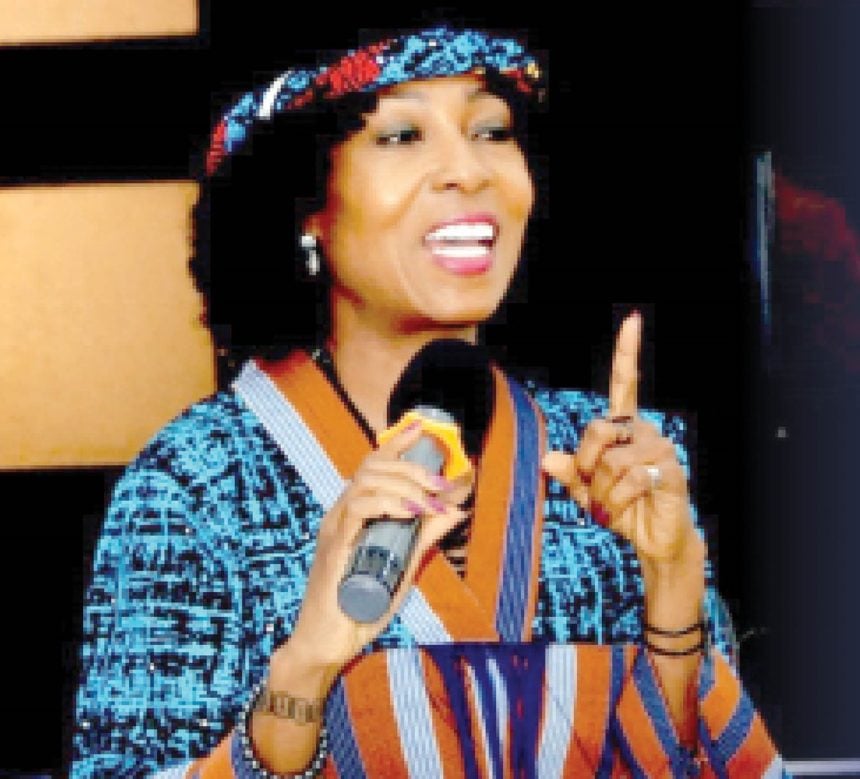
Aderonke Ige, a legal practitioner and social justice activist, who leads the environmental justice campaigns at the Help Initiative for Social Justice and Humanitarian Development, speaks with ADEOLA OJO, on issues bordering on water as a fundamental right, commercialisation of water in Nigeria and the water justice crisis among other issues.
Is water a right?
Water is a fundamental human right. And it must never be reduced to a commodity that people have to negotiate for; it is life. This is the reason many civil society organisations are focused on the human right to water and the promotion of public ownership and democratic control of water resources. It is also the reason that we have some ongoing campaigns aimed at amplifying community voices to strengthen advocacy for democratic control of water resources. There must be public alternatives to water privatisation, including the concept of “Blue Communities” as models of sustainable water management.
Is water a scarce commodity in Nigeria?
On paper, Nigeria is not a water-scarce country. It is blessed with rivers, lakes, wetlands, and vast groundwater reserves. Yet for millions of Nigerians, access to clean, safe, and affordable water remains uncertain, unequal, and, in many cases, out of reach. This contradiction should force us to confront an uncomfortable truth: Nigeria does not have a water availability problem; it has a water justice crisis.
How will you describe Nigeria’s water situation?
Across the country, water is increasingly treated not as a public good or a human right, but as a commodity, something to be bought, sold, and rationed based on ability to pay. The consequences are visible in everyday life, especially for the poor, and even more so for women and girls. In fact, in parts of Lagos state, water flows, but not from public taps. It comes in jerrycans, pushed on wheelbarrows, sold by vendors, or packaged in sachets. In informal settlements like Makoko, families often spend a significant share of their daily income just to secure water that is not even guaranteed to be safe.
READ ALSO: ‘We used to rely on public water system, but it became too unreliable’
The same pattern plays out across states of the country on a rapid race to urbanisation, where urban expansion has outpaced public water infrastructure, leaving peri-urban communities dependent on private boreholes and informal supply chains. In other parts of Nigeria, aging infrastructure and inconsistent supply mean that even where pipes exist, water does not always follow. Therefore, public water is almost non-existent. What emerges is a quiet but deeply entrenched system of inequality, where the poorest Nigerians often pay the most for the least reliable water.
So, you believe there is water injustice in Nigeria?
Yes. In these dynamics, it is also essential to note that water injustice in Nigeria has a distinctly gendered face. In rural communities across Nigeria, it is women and girls who bear the daily responsibility of securing water for their households. This can mean walking long distances, waiting in queues, or relying on unsafe sources when options run out.
These are not isolated inconveniences; they are structural burdens tied to what economists and feminists describe as social reproduction: the unpaid labour required to sustain life, care for families, and maintain households. When water systems fail, this labour intensifies. Girls miss school. Women lose time for income-generating activities. Health risks increase. The cycle of poverty deepens. In this way, water injustice is not just about access; it is about how entire systems are built on the invisible labour of women.
In the Niger Delta, the crisis takes on an even more violent form. Decades of oil extraction have left rivers and creeks heavily polluted. In communities such as Ogoniland, water that was once used for drinking, cooking, and fishing is now unsafe.
Women who depend on these water sources for both household use and livelihoods face a double burden: they must travel farther for clean water while also losing the economic activities tied to those same ecosystems. This is what maladjustment looks like in practice: communities forced to adapt to environmental destruction they did not create, without the resources or support to do so safely or sustainably.
What are your views on government’s response to this?
Despite these realities, policy responses in Nigeria continue to lean toward commercialisation, cost-recovery, and loan-financed infrastructure. But the evidence is clear: when water is governed primarily through market logic, access becomes unequal. Tariffs rise, public accountability weakens, and low-income communities are left behind.
Water is not like other goods. It is fundamental to life, public health, and human dignity. Treating it as a commodity inevitably produces exclusion. What Nigeria needs is not more privatization or debt-driven “reforms,” but a recommitment to public water systems that are equitably funded, transparently managed, and democratically governed.
Across Nigeria, communities are already organizing, adapting, and demanding better. From grassroots efforts to improve local water access to civil society advocacy pushing back against pollution and neglect, there is no shortage of local knowledge or leadership. What is missing is meaningful inclusion. Too often, decisions about water are made far from the communities they affect, by policymakers, consultants, or external actors who do not experience the daily realities of water insecurity. If water systems are to work, they must be shaped by those who rely on them most.
What’s your message on the World Water Day?
“World Water Day” should not be reduced to slogans or symbolic gestures. It should be a moment of reckoning. Nigeria has a choice to either continue down a path where water is commodified, inequalities deepen, and communities are left to cope, or build a system grounded in justice, rights, and collective responsibility. This means recognizing water and sanitation as enforceable human rights; prioritizing public investment over privatization and debt; protecting water sources from pollution and extractive industries; reducing the disproportionate burden on women and girls; placing communities at the center of decision-making.
Water is life. But in Nigeria today, access to water often depends on income, geography, and gender. That is not just a policy failure, it is a justice failure, and until we confront it as such, millions will continue to be left behind.
WATCH TOP VIDEOS FROM NIGERIAN TRIBUNE TV
- Relationship Hangout: Public vs Private Proposals – Which Truly Wins in Love?
- “No” Is a Complete Sentence: Why You Should Stop Feeling Guilty
- Relationship Hangout: Friendship Talk 2025 – How to Be a Good Friend & Big Questions on Friendship
- Police Overpower Armed Robbers in Ibadan After Fierce Struggle


