
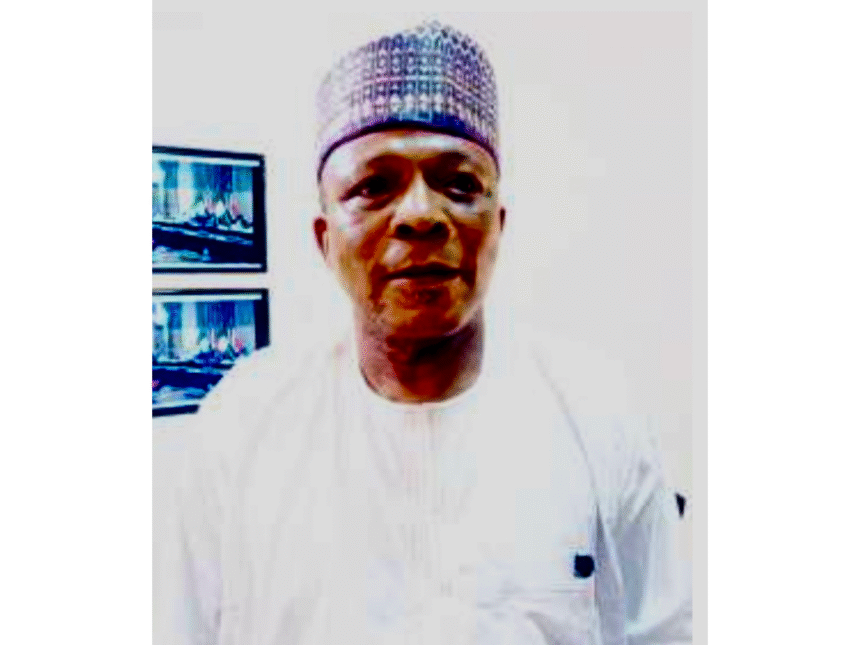
Barrister Salman Jawondo is a Senior Advocate of Nigeria (SAN) and former Attorney General, Commissioner for Justice, Kwara State. In this interview with BIOLA AZEEZ, he speaks on issues relating to power and independence of judiciary, among sundry constitutional matters. Excerpts:
WHAT do we mean by judicial independence within the context of Nigeria’s democratic system?
In every democracy, the role of judiciary is very important because it is the arbiter not only between me and you, who are regarded as common men, but between the governments; that is, different arms of government. Not only that, the judiciary interprets the law made by the legislature. It also, when called upon, interprets and pronounces on the executive arm. So, judiciary is like the balance order. It holds balance in every democracy so that a person elected under democracy does not become a tyrant. So also, the law made by a national or the State Assembly is not made in such a way that it violates the constitution. In another word, judiciary holds the balance between those entrusted with powers — executive, the legislative, and the people. Judiciary is an indispensable arm of government in every democracy.
Why is separation of powers among the executive, legislature, and judiciary critical for democracy?
You see, the relationship between judiciary and other arms of government is that of checks and balances. Like I said, judiciary holds the check and balance. It is possible for the legislative arm and the executive arm to collude because the law making and the execution of the law are duties of the legislators and the executive.
In doing so, the tendency is always there to either violate the constitution or the right of citizens. So, it is judiciary that will now determine the legality or constitutionality of this law and the executive. So, judiciary, in terms of the relationship, holds the balance. So, the relationship is that judiciary should not be seen to be pandering towards legislative or executive. Judiciary is supposed to maintain the balance.
Do you think the Nigerian judiciary is truly independent today, or is it still under political influence?
If you look at it from the status, vis-à-vis practical applications, you may say judiciary of Nigeria is not as independent as it should be. For example, if you talk of appointment of the Chief Judge of a state. The CJ, for example, is recommended by NJC. It goes to the executive. The president sends it to the National Assembly for screening and after confirmation he’s sworn in by the executive. You see that the role of executive arm is very prominent in the appointment of CJ. So also the judges and the justices.
Now, when we come to the issue of monetary independence, financial independence, judiciary is not yet completely independent as it should be in Nigeria because you still rely on the executive arm to get your finances. Even when they are appropriated, you are still subjected to the whims and caprices of the executive to say there’s fund or there’s no fund. And if you want to have a truly democratic system with a judiciary that will guarantee the right of every person, that judiciary must be completely independent of the executive and legislature.
There was a time when the judicial workers, JUSUN, went on strike on this issue of financial independence. That’s financial autonomy of the judiciary. The idea was that every year, let judiciary prepare its own budgets, including the expected gratuity to be paid to people who are expected to retire in a year. Then let that now form components. A component of the budget proposal that will now go to the assembly either national or the state assembly. If that is now approved, every month, whatever comes to the state or approved to the federal, then the judiciary will be separated.
What is due to judiciary — that one will be separated and paid to the account maintained by judiciary.
That was the agitation and steps were taken in that direction, but up till today, I don’t think that has become a reality.
And we cannot run away from that fact — judiciary needs this financial autonomy. In some states it is the state governor that will determine when to change the vehicles for the judges; what type of vehicles to buy for the judges; the houses and so on and so forth. It is not supposed to be so because that ties the judiciary to the apron of the executive. And so you cannot expect anything. In such cases, we expect interference. That gives room for interference. The judges are supposed to get detached from politicians.
Now, the other aspect of independence is the personality independence. This is the people involved in this matter; the judges. The judges are the one that form the judiciary. Yes. It depends on individual. Even as we are saying that judiciary is not so much independent as it should be, we still have judges who are completely independent and nobody can influence them. That is what I mean by personal independence depending on the person of the judge. So, that in itself is a form of independence. That’s why in the legal parliament we say some judges are pro-establishment, while some others are not.
So, if you now come to the process of appointment of judges, it is going to be difficult unless you have somebody who’s of strong character to be completely independent of interference. Because what we call independence is not just limited to what we have said. Independence even includes not allowing yourself to be influenced either by your friends, your relations, or members of the public, and not even the executive.
Why is judicial independence so difficult to achieve in Nigeria?
From my experience, politicians, especially in Nigeria, believe in appropriating all the available spaces, even beyond the powers that are expressly provided for them in the constitution. They want to use that power to acquire and dominate everywhere.
For example, when I was the attorney general, there was a judgment in respect of local government caretaker chairmen. Naturally, that is how it should be. But somebody called me saying, “why did the judge do that? Why did he deliver that kind of judgement?”
I said, “Are you saying the judge should deliver a judgment that is contrary to the position of the Supreme Court or the constitution?” He said, “No, he should have done this or that”.
I said, “This judge is my friend. I know him very well. I agree with his judgment. Even though it’s against government. I say I agree with his judgment. That is the law.”
Now what I’m trying to say is that some politicians don’t believe that a judge should give judgment that is not favourable to the government. Yes, and so whatever power they have, they want to exercise to ensure that the judgment goes in their way even if the government has done the wrong thing. So, it is the attitude.
There was a time in 2015 when somebody told me at the airport in Abuja, directly, “we own the judges, the judiciary”. He’s a politician; he was a high-ranking politician. So, that is the mentality of Nigerian politicians — that everybody must kowtow, including judges.
But you see, what I always say to them is that if you are in power today and you cow the judiciary, don’t forget that when you’re out of power somebody else will use the judiciary against you.
How has the judiciary contributed to growth of democracy in Nigeria?
Let’s assume that there’s no judiciary and you have the kind of elections we have been experiencing. Let’s even limit ourselves to 1999 to date. What would have been the situation?
It means people would have taken dastard measures to settle their political differences.
And in most cases, judiciary has rendered judgments that ensure that the constitution — that is the Supreme Law — prevails.
I’ll give you an example. Even when the military was in government, our judiciary was forthcoming. If you look at the case of Ojukwu and Lagos State government — that’s 1987. The property, which Ojukwu inherited from his father, was demolished and taken over by the state government. It was the judiciary that restored that property to him.
That shows you that at every point in time we have fearless judges. We are up and doing. And we still have a good number of them. Whatever challenges or shortcomings you may be talking about judiciary today are very minute compared to the larger percentage of those who are there.
Now, coming to this democracy, you remember when there was dispute between Atiku and President Obasanjo, just coming from military background and wanted to remove Atiku. It was judiciary that said, “No, you had a joint ticket. You cannot remove him”.
And there are so many cases that were settled by judiciary.
Now, look at the case of Imo State that brought in the present governor of Imo state, Hope Uzodinma. Many people criticize the judgement, including lawyers. But that was judiciary at its best, deciding the issues before it without sentiment. Because when they went to court with the result, the man came third or fourth in the election according to INEC results. But the man went to court and said, “I came first”. That about 350,000 votes were deducted from my votes. That if you add these 350,000, it would make me to be the first. He tendered the result given to security operatives. What the judiciary did — it added it and discovered that the man came first.
Many people are saying, “Ah, the man who came third is now the first”. No. If you understand the case very well. He came first, but they removed about 350,000 votes from his votes. That’s why he came third or fourth. Judiciary did not bother itself with sentiment. It applied the law based on the facts presented to the court.
There was an argument by another Senior Advocate calling for amendment in the Electoral Act to prevent judges from determining fates of millions of Nigerians, saying election disputes should go back for fresh elections. What do you think?
One thing I want to agree with you is that the law relating to election petition weighs more against petitioner. We have to tell ourselves the truth. It is petitioner that has number of days to file petition. The respondent does have number of days but it can come by way of extension. Everything must be proved by the petitioner.
And there is a presumption of regularity of result declared by INEC. That’s another problem. And then, you are challenging the conduct of election by INEC. The INEC will have to defend that. In doing that, he will be supporting the winner. So, it means you are confronting the INEC, confronting the officer declared as the winner and even, in most cases, the security who supervised the election. None of them will want the election to be nullified. They will do everything possible to say that they have done their work well.
Now, people have argued that if they challenge the election, INEC should be neutral by putting the facts before the court. But that is theory. In practical situation, nobody will conduct an election and then sit down and let anybody rubbish what you have done.
WATCH TOP VIDEOS FROM NIGERIAN TRIBUNE TV
- Relationship Hangout: Public vs Private Proposals – Which Truly Wins in Love?
- “No” Is a Complete Sentence: Why You Should Stop Feeling Guilty
- Relationship Hangout: Friendship Talk 2025 – How to Be a Good Friend & Big Questions on Friendship
- Police Overpower Armed Robbers in Ibadan After Fierce Struggle


