
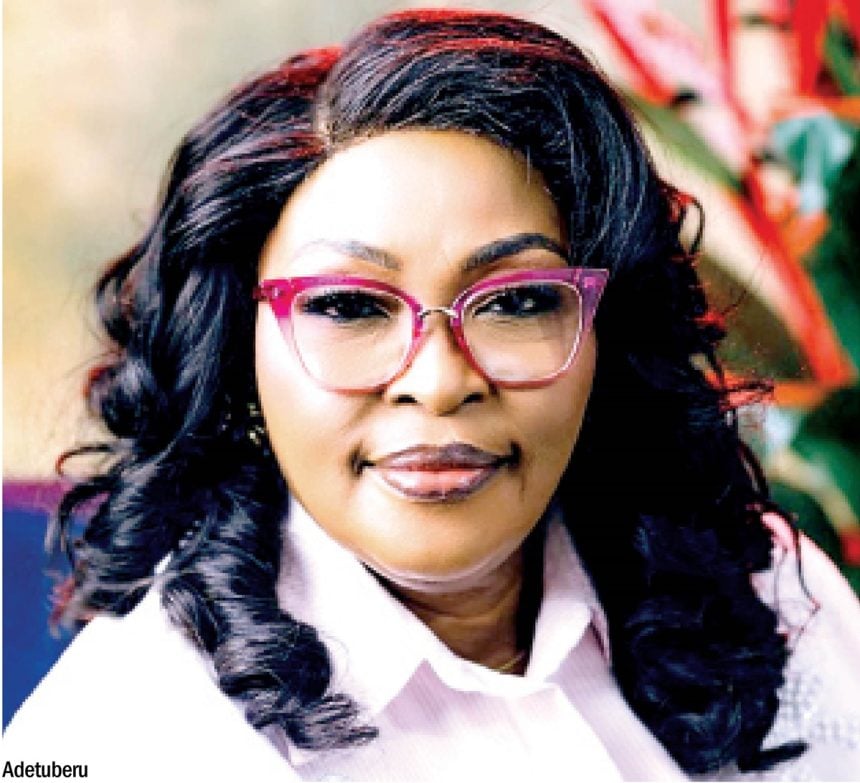
In this interview with Yetunde Ajanaku, Funke Adetuberu, therapist, counsellor, preacher, author, and founder of MendingLives, discussed mental health awareness, therapy, trauma, addiction, emotional healing, relationships, and the need for intentional psychological wellbeing. She also shared her personal journey from pain to purpose and her passion for raising emotionally healthy individuals and families.
FROM your professional perspective, how would you assess the current state of mental and emotional health awareness in Nigeria?
From a professional standpoint, mental and emotional health awareness in Nigeria is gradually increasing, but it is still significantly underdeveloped and often misunderstood.
Many Nigerians pay close attention to physical health, but mental and emotional wellbeing is often ignored. Yet, mental health shapes how we think, behave, relate, and function in society.
What we are currently witnessing, rising levels of stress, addiction, conflict, broken relationships, and maladaptive behaviours, are indicators of deeper, often ignored mental and emotional health challenges.
While awareness is improving, it remains largely surface-level. What Nigeria needs now is deeper education, deliberate advocacy, and a cultural shift that treats mental health with the same urgency and importance as physical health.
Because ultimately, the state of the mind determines the state of the life
Many Nigerians still shy away from therapy or professional counselling. What do you think is responsible for this, and how can this mindset be changed?
Many Nigerians shy away from therapy because of stigma, ignorance, and the normalisation of emotional struggle. A lot of people are living in survival mode, and over time, struggle becomes familiar. Therapy then feels unnecessary or uncomfortable.
There is also a deep-rooted belief that therapy is a sign that something is “wrong” with you. People would rather suffer silently than be associated with emotional vulnerability.
Ironically, the same people who quickly seek treatment for physical illness often neglect their emotional health because psychological struggles are less visible.
To change this mindset, we must intensify education and awareness. Therapy is not a sign of weakness; it is a tool for growth, clarity, and stability. Organisations should also integrate mental health support into their systems.
Therapy is not for “broken people”. It is for human beings who want to function better, live healthier, and become whole.
With rising cases of stress, addiction, and relationship breakdowns, what urgent steps should government and institutions take?
The rising cases of stress, addiction, and relationship breakdowns are symptoms of deeper systemic pressure on individuals and families.
Economic hardship has placed enormous strain on people, and that stress spills into homes, marriages, parenting, and decision-making. Many relationship breakdowns today are rooted in emotional overload and unprocessed financial stress.
Addiction has also become a coping mechanism, while social media comparison continues to fuel anxiety, insecurity, and dissatisfaction, especially among young people.
Government and institutions must intentionally integrate mental health into healthcare, schools, and workplaces. There must also be widespread education and awareness about stress, addiction, and emotional wellbeing.
People should not wait until breakdowns happen before seeking help. We must normalise early intervention and create a cultural shift from endurance to healing.
In your opinion, how can faith-based organisations and therapeutic practices better collaborate to drive healing in society?
Therapy is not in competition with faith. Therapy is not anti-spiritual. Therapy is simply the process of healing the mind and the soul, just as medicine treats the body.
One major challenge is the tendency to overspiritualise psychological issues. While spirituality is important, not every struggle is spiritual in origin. Many issues people battle with, trauma, addiction, emotional instability, unhealthy relationship patterns, require structured psychological intervention.
Being spiritual does not automatically mean being emotionally healthy. Human beings are spirit, soul, and body, and each dimension requires attention.
Faith-based organisations and therapists must therefore collaborate intentionally, recognising that healing is both spiritual and psychological.
You wear many hats, preacher, therapist, counselor, author, and life coach. How would you define your core calling?
At the core of everything I do, my calling is very clear, I am here to heal, build, and raise people who are mentally, emotionally, and psychologically sound.
All the roles I carry are simply different expressions of one assignment: to touch lives deeply and transform them completely.
Through therapy and counselling, I help people heal from trauma, addiction, and dysfunctional patterns. Through speaking and writing, I shape conversations and shift mindsets.
READ ALSO: The brain under pressure: Living with anxiety and finding balance
If I had to define my calling in one sentence, it would be this: I am here to mend lives and raise whole individuals who can, in turn, build a better society.
Can you take us back to the beginning—what inspired your journey into therapy, counselling, and ministry?
My journey into therapy, counselling, and ministry did not begin from comfort, it began from pain.
I often describe myself as a wounded healer. I grew up in a deeply dysfunctional environment where love, stability, and emotional safety were absent. My parents separated when I was six months old, and I grew up without a father figure.
Those experiences shaped many of my early decisions and pushed me into searching for love and validation in the wrong places. But instead of allowing my story to destroy me, I allowed it to refine me.
My personal healing journey opened my eyes to the fact that many people are silently carrying wounds from their past. That realisation birthed my passion for therapy and ministry.
Today, I do what I do because I understand pain, but more importantly, I understand healing.
You founded MendingLives Therapeutic Services. What vision birthed the initiative?
The vision behind MendingLives was born from one simple truth: when a life is healed, it naturally becomes a channel for healing others.
At MendingLives, we work with individuals and families dealing with addiction, anger, trauma, personality challenges, and relationship breakdowns. We also support couples through compatibility and personality assessments.
One of our core principles is this: we do not treat without screening. Many visible problems are only symptoms of deeper emotional and psychological issues.
Screening helps us move from assumption to accuracy, and from surface-level intervention to deep transformation.
The broader vision is to raise emotionally sound individuals, build healthier families, and contribute to a more stable society.
Over the years, how has your experience shaped your understanding of healing?
Over the years, my experience has shown me that most relationship struggles do not begin in the relationship, they begin long before it.
Many people enter marriage carrying unresolved trauma, emotional wounds, unhealthy patterns, and unmet needs from their past. Love alone cannot fix what has never been addressed internally.
Marriage is not sustained by emotions alone. It requires emotional intelligence, psychological awareness, compatibility, and intentional effort.
Through structured screening and compatibility assessments, we are able to identify emotional triggers, behavioural patterns, communication styles, and trauma history.
True healing begins with clarity. When people understand themselves and their patterns, change becomes possible.
You are a prolific author with over 100 books. What drives your consistency as a writer?
What drives my consistency is a simple philosophy: I want to die empty.
I believe knowledge and experience are not meant to be kept; they are meant to be documented and passed on.
Writing allows me to preserve insight and extend my voice beyond physical presence. Even years from now, someone can still pick up my work and receive clarity and direction.
I also write because many people are struggling but do not have the language to explain what they are going through. Through my books, I help simplify emotional and psychological realities.
What is documented can transform generations.
In a society where therapy is still gaining acceptance, how do people react to the work you do?
Reactions are mixed. While there is growing curiosity and openness, there is still resistance rooted in culture, tradition, and long-standing beliefs.
Many people are taught to “be strong” or “pray about it” without understanding the psychological nature of what they are dealing with.
This has created a gap where emotional and psychological struggles are often ignored or mislabelled as purely spiritual problems.
That is why I remain consistent in speaking about therapy and creating awareness. Gradually, the narrative is changing as people begin to see lives transformed and relationships restored.
Because awareness is built through consistent conversation.
Your work involves dealing with deep emotional and psychological issues. How do you manage the emotional demands of your profession?
The emotional demands of this work are real. When you are constantly engaging with people’s pain, trauma, and deeply personal struggles, it requires a high level of emotional capacity and discipline.
One of the most important skills I have developed is the ability to separate empathy from emotional entanglement. I listen deeply and engage fully, but I do not absorb what I hear. That distinction is critical because it allows me to remain effective without becoming overwhelmed.
With over four decades of experience in counselling and therapy, I have built professional resilience and emotional structure. Experience teaches you how to carry responsibility without carrying the burden.
I am also grounded in purpose. When you understand that your work is about helping people move from pain to healing, it gives you strength to sustain the work.
What have been some of the most challenging moments in your journey, and how did you navigate them?
One of the most challenging aspects of my journey has been the intensity and volume of the work itself.
There are days when I sit through 10 to 12 therapy sessions back-to-back, each lasting about an hour. That level of engagement requires mental stamina, emotional discipline, and professional structure.
The challenge is not just in the number of sessions, but in the depth of each one. Every client deserves attention, clarity, and compassion.
I have navigated this through training, experience, structure, and discipline. Over the years, I have developed the capacity to stay emotionally balanced even within demanding schedules.
Ultimately, the results,the healing, clarity, and transformation people experience—make the demanding moments worthwhile.
As a woman operating at such a high level across multiple roles, how have you balanced your personal life with your calling?
Balancing multiple roles has been possible because I am very structured and intentional. I do not leave my life to chance,I plan it, prioritise it, and stay disciplined about how I use my time and energy.
I am also at a stage in life where some pressures have naturally reduced. My children are grown and married, which has given me more space to focus on my calling and purpose.
I also prioritise activities that help me stay grounded and refreshed, such as swimming and reading.
I believe balance is not about doing everything at once, it is about understanding your season and managing it wisely.
Today, I can function at a high level without being overwhelmed because I have built my life intentionally, one season at a time.
Looking back, is there anything you would have done differently in your journey?
Looking back, one thing I would have done differently is this: I wish I had the clarity I have now much earlier in life.
I wish I had understood earlier that human beings are multidimensional,spirit, soul, and body. That understanding changes how you approach struggles, healing, and purpose.
I also wish I had dealt with emotional and psychological baggage earlier. Growing up in a dysfunctional environment left wounds and patterns that I later had to confront and heal from.
However, I do not live in regret. Those experiences shaped the depth, compassion, and understanding I carry today.
So while I may have wished for earlier clarity, I also recognise that my journey has been purposeful.
What advice would you give to women who feel called to make impact but are unsure where or how to start
My advice is simple but critical: start with yourself.
Before you talk about impact or influence, there must be self-discovery and healing. You cannot give what you do not have.
Many women want to make impact while still carrying unresolved pain, trauma, rejection, and emotional wounds. If these issues are not addressed, they eventually show up in leadership, relationships, and public life.
That is why I strongly emphasise this: heal first before you lead.
Therapy is essential because it helps you understand your patterns, triggers, emotional responses, and identity. Through structured assessments and screening, people gain clarity about themselves and begin true healing.
True impact is not built on passion alone,it is built on wholeness.
So my advice to women is this: discover yourself, heal yourself, and then present your healed self to the world.
WATCH TOP VIDEOS FROM NIGERIAN TRIBUNE TV
- Relationship Hangout: Public vs Private Proposals – Which Truly Wins in Love?
- “No” Is a Complete Sentence: Why You Should Stop Feeling Guilty
- Relationship Hangout: Friendship Talk 2025 – How to Be a Good Friend & Big Questions on Friendship
- Police Overpower Armed Robbers in Ibadan After Fierce Struggle


