
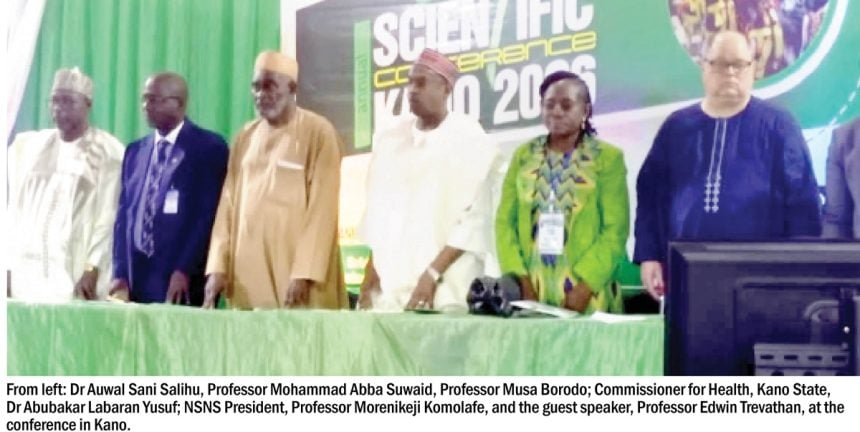
NEW research from northern Nigeria has identified malnutrition as the leading cause of death among children with epilepsy, even when they receive appropriate seizure treatment.
Edwin Trevathan, a professor of paediatrics and neurology at the Vanderbilt Institute for Global Health, disclosed this in his keynote address titled “Challenges and Opportunities in Bridging the Epilepsy and Neurological Disorder Diagnosis and Treatment Gaps in Africa’s LMICs, at the Nigerian Society of Neurological Sciences conference in Kano.
Trevathan stated that malnutrition is the strongest predictor of mortality, especially among children with severe undernutrition and those living with additional neurological conditions, such as cerebral palsy.
According to him, ongoing community-based studies in northern Nigeria that track newly diagnosed epilepsy cases and follow patients over time show that, while treatment improves seizure control, it does not eliminate the risk of death.
“We observed that seizure control improved with treatment, but deaths continued to occur. When we analysed the data, malnutrition stood out as the dominant risk factor,” he said.
He explained that malnutrition worsens epilepsy outcomes by increasing susceptibility to infections, reducing the body’s ability to tolerate anti-seizure medications, slowing brain development and recovery, and increasing the likelihood of prolonged or severe seizures.
The expert emphasised that epilepsy care should be integrated with nutrition and child health services rather than provided in isolation.
“You can provide the correct medication, but if a child is severely malnourished, the risk of death remains high. Epilepsy care must be holistic,” he added.
Despite the challenges, Trevathan noted that treated patients showed significant improvements in quality of life, including better school attendance, reduced stigma, and enhanced daily functioning once seizures were controlled.
He said the next phase of research would test scaled-up, integrated epilepsy care models across multiple Nigerian states, involving the screening of hundreds of thousands of residents and the integration of nutrition and paediatric support into community treatment pathways.
President of the Nigerian Society of Neurological Sciences, Professor Morenikeji Komolafe, said neurological disorders—including epilepsy, stroke, and neurodevelopmental conditions—are an increasing public health concern in West Africa, where specialist numbers remain limited and access to care is uneven.
She described epilepsy as a common but highly stigmatised neurological condition that requires coordinated, evidence-based responses, and called for stronger collaboration between African neurologists and diaspora experts.
“This meeting provides an opportunity to discuss and propose evidence-based solutions for epilepsy and other neurobiological conditions in Nigeria,” she said.
Komolafe urged participants to use the conference as an opportunity to connect with colleagues both locally and internationally, emphasizing the importance of shared expertise in advancing neurological care throughout the region.
The chairman of the occasion, Emeritus Prof. Musa Borodo, urged African neurological specialists to prioritise capacity building, integrate mental health services, and promote affordable innovations in the management of epilepsy and related disorders.
He highlighted the interconnected effects of poor health, limited education, disability, and psychosocial stress, noting that these factors compound the burden of neurological disease.
“In developing countries, the challenges of diagnosis and management become profound because support systems are minimal,” he said.
Borodo also pointed to the limited availability of epilepsy surgery in many African countries and called for regional cooperation to develop surgical training programs, infrastructure, and referral systems for patients requiring advanced care.
He urged researchers to focus on scalable, locally adaptable solutions, adding that the conference provides a platform to move “from what seems impossible to what becomes achievable.”
WATCH TOP VIDEOS FROM NIGERIAN TRIBUNE TV
- Relationship Hangout: Public vs Private Proposals – Which Truly Wins in Love?
- “No” Is a Complete Sentence: Why You Should Stop Feeling Guilty
- Relationship Hangout: Friendship Talk 2025 – How to Be a Good Friend & Big Questions on Friendship
- Police Overpower Armed Robbers in Ibadan After Fierce Struggle


