

By FAIDA Samuel
Art critic and Curator
Introduction
Photography has traditionally served as a medium for preservation and documentation. From its inception, it has documented faces, traditions, landscapes, and societal realities that would otherwise fade with time. Unlike memory, which can fluctuate and diminish with time, a photograph captures a certain moment. It becomes an indicator of existence. It confirms that something or someone was present. African countries, for example, have been affected by colonial interruption, modernity, and cultural transition; photography serves an even greater purpose. It does more than just capture what is visible; it also safeguards what is at risk of being forgotten.
In many African contexts, histories were interrupted, identities were reshaped, and spiritual systems were suppressed through colonial contact and global religious expansion. Cultural practices that once defined belonging began to vanish or were reframed as inferior. In such conditions, the act of photography becomes more than artistic expression. It becomes an act of documentation for the future. To photograph culture is to insist on its value. To frame heritage within the camera’s view is to declare that it deserves attention, dignity, and continuity. Hence, Hafizat Adegbile, who is the focus of this review, uses photography to capture and discuss relevant issues affecting Nigerian culture, identity, and religion. Therefore, this review proceeds by; giving a brief background of Hafizat Adegbile, examining photography as cultural memory in Hafizat Adegbile’s visual practice, and a conclusion was drawn.
ALSO READ: Influence of Art and Graphics in Online Casino Australia Design
Brief Background of Hafizat Adegbile
Hafizat Adegbile (hereby referred to as Adegbile), is a Nigerian-born visual artist and art photographer. Her work centres on the preservation of cultural heritage and identity, she uses photography as a reflective and caring medium that invites viewers to pause, remember, and engage with what they see.
In a time when images circulate rapidly and are quickly forgotten, the artist encourages a slower and more thoughtful way of looking. For her, photography is not only about aesthetics; it is about memory, history, and responsibility. She is dedicated to cultural heritage and its documentation. Adegbile believes that culture shapes identity and influences how communities understand their past and imagine their future. Consequently, this belief forms the foundation of her artistic practice. Through her lens, she documents traditions, symbols, and spiritual systems that risk being overlooked or erased in a rapidly changing world.
Therefore, her photographic works serve as visual archives that protect and honour indigenous knowledge. Her practice syndicates traditional photographic techniques with contemporary digital processes. This blend allows her to create visually interesting works that remain entrenched in cultural authenticity while engaging modern audiences. By merging the past and present, she reflects on the dynamic role culture plays in shaping identity and guiding future generations. Furthermore, her works also explore cultural exchange, showing that heritage can be preserved while still evolving. Adegbile’s works have been exhibited nationally and internationally in several galleries, national exhibitions includes; Art colony gallery exhibition, Ibadan in 2021, Ondo Art Fest- Oshodi Art Gallery Lagos Nigeria, in 2022 and Undiscovered- Thought Pyramid Art Centre Nigeria in 2025, international exhibition includes; Open Call- Thomson Gallery Switzerland in 2024, Annual Open Show, Open Gallery UK in 2025, Identity Exhibition, Glasgow Gallery of Photography UK in 2025 and – Celebrating Women -Tayese Academy of Art and Culture UK in 2025 among others just to mention but a few. As such, these exhibitions position her within a global conversation about identity, memory, and representation.
Photography as Cultural Memory in Hafizat Adegbile’s Visual Practice

Plate i, Fragments of Us, Hafizat Adegbile, Digital Art/ Photography, 2025
In Fragments of Us, plate i, the artist presents a female figure facing what appears to be a wall rendered in a dominant orange tone with touches of black. The black colour against the orange surface creates a sharp contrast and produces an almost rough visual texture. The touches of black colour on the orange background created a dazzling effect, strengthening the emotional weight of the composition. The woman is seen to be carrying multiple books and cups of different sizes, shapes, and colours on her head. These objects appear heavy and burdensome, suggesting accumulated weight rather than ordinary possession
In Fragments of Us, it is beyond just an image; it carries symbolic meaning. The arranged books and cups serve as a metaphor for the burdens and scars left by colonialism. As Adegbile explains, “In Fragments of Us, the photograph explores the deep scars left by colonialism on the African continent, particularly the erasure and distortion of identity”. Thus, the title itself suggests brokenness, something once whole that is now divided.
Similarly, In Fragments of Us, Adegbile confronts the historical rupture caused by colonialism and its lasting impact on African identity. The photograph does not merely reference the past; it visualizes the psychological and cultural fragmentation that followed foreign domination. The idea of “fragments” suggests something once whole that is now broken or scattered. Through this work, Adegbile presents identity as disrupted yet still present. The work acknowledges pain without surrendering to it.
Colonialism imposed foreign systems of governance, religion, and value structures that tempered indigenous ways of life. Therefore, In Fragments of Us becomes a space where history lingers. Adegbile does not attempt to recreate a romanticized precolonial past. Instead, she reflects on the tension between inherited traditions and imposed realities. Photography here functions as recovery. By naming and visualizing fragmentation, she begins the process of reassembly. The work insists that even in brokenness, cultural memory survives.
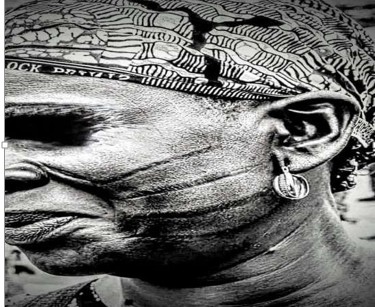
Plate ii, Facets of Identity; Yoruba tribal Mark, Hafizat Adegbile, Digital Art/ Photography, 2025
The artwork in plate ii, is titled; Facets of Identity; Yoruba tribal Mark. It depicts a black- and-white photograph that shows the side profile of an elderly Yoruba woman. The first thing that captures the viewer’s attention in the work is the bold tribal marks inscribed on her face. The marks stand prominently against her aged skin, whose rough texture reveals the passage of time. The monochrome treatment removes distraction and directs focus to the lines, wrinkles, and tribal marks that define her presence.
Traditionally, Yoruba tribal marks function as signs of lineage, origin, and belonging; they communicate identity without speech. As Adegbile notes, “Facets of Identity; Yoruba Tribal Mark explores identity through traditional Yoruba tribal marks, which were once important symbols of family, origin, and cultural belonging. In the modern age, these marks are gradually being forgotten”.
In this photograph, Adegbile turns the body into a living archive, Yoruba tribal marks once served as markers of origin, lineage, and belonging. They communicated identity without words. Today, many of these markings are disappearing due to modernization, changing beauty standards, and shifting social values. Through this work, Adegbile presents tribal marks not as outdated practices but as cultural inscriptions that carry history.
In line with the aforementioned, the artist further notes that, “through this piece, I express a desire for tribal marks not to disappear, but to be remembered and respected as an important part of our identity. By combining traditional symbols with a contemporary visual style, the artwork reflects the need to preserve cultural heritage while living in a changing world”.
Indeed, the title “Facets of Identity Yoruba Tribal Mark ” suggests diversity, identity is not singular; it has layers. By combining traditional symbols with contemporary visual techniques, Adegbile places the past and present in dialogue. The photograph resists the idea that progress requires erasure. Instead, it proposes coexistence. The body becomes a site where history remains visible. In documenting the image of tribal marks, the artist preserves a visual language of belonging.
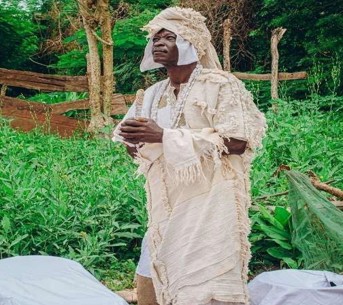
Plate iii, Orisa: Honouring our Deity, Hafizat Adegbile, Digital Art/ Photography, 2025
Orisa: Honouring Our Deity, in plate iii depicts a male figure standing in a posture that suggests worship and reverence. The male figure is seen to be wearing traditional Yoruba attire. In front of him and directly behind him are clay pots draped in white cloth. In Yoruba spiritual practice, clay pots often serve ritual and sacred functions. The presence of white fabric immediately evokes Obatala, the deity associated with purity, wisdom, and moral balance. According to Adegbile “Orisa: Honouring our Deity challenges the historical erasure of African spiritual systems and reinstates them as essential components of African identity and heritage. It depicts the deities not only as spiritual icons but as cultural figures whose values still guide communities today”.
In Orisa: Honouring our Deity, the artist addresses spiritual heritage, traditional African religions endured centuries of destruction, particularly during colonial expansion and missionary influence. Many indigenous belief systems were considered inferior or pagan. This photograph challenges historical framing. By presenting Obatala as a figure of wisdom, purity, and moral balance. Hence, in this work, Adegbile attempts to restore dignity to Yoruba spirituality.
The photograph does not treat the deity as myth but as a cultural presence. Obatala represents clarity, justice, compassion, values that continue to guide communities. Through careful visual construction, Adegbile transforms the photograph into a space of reverence. Spirituality is not presented as a relic but as a living philosophy. In doing so, the artist reclaims African religious identity as central rather than peripheral.
Conclusion
In conclusion, reviewing Fragments of Us, Facets of Identity: Yoruba Tribal Mark, and Orisa: Honouring Our Deity, Hafizat Adegbile constructs photography as an act of resistance against cultural erasure. Each work addresses a different site of identity, history, the body, and spirituality, yet they remain deeply connected. Together, they form a visual argument that culture does not disappear simply because it is suppressed. It survives in fragments, inscriptions, rituals, and memory.
In Fragments of Us, identity appears burdened but not erased. The scars of colonialism remain visible, yet the figure stands, suggesting endurance. In Facets of Identity: Yoruba Tribal Mark, the body becomes an archive in which lineage and belonging remain inscribed despite changing social attitudes. In Orisa: Honouring Our Deity, spirituality is reclaimed as living heritage rather than abandoned tradition. Through these works, Adegbile restores dignity to what history attempted to silence.
Her photography does not romanticize the past, nor does it reject modernity. Instead, it proposes continuity. By combining traditional subject matter with contemporary visual techniques, she shows that preservation and evolution can coexist. Within a fast-moving visual culture that often consumes and forgets, Adegbile insists on slowness and attention. She invites viewers to look carefully and to recognize the value embedded in what may seem ordinary or outdated. In doing so, she transforms photography into a space of remembrance and responsibility.
Finally, Adegbile’s visual practice affirms that identity, though challenged by history and change, remains resilient. Against erasure, she offers image as memory, and memory as survival. Through her lens, photography becomes a space where memory is not passive but active, where identity is examined, protected, and reaffirmed. It is within this framework of preservation and cultural remembrance that Adegbile’s photographic works unfold.
WATCH TOP VIDEOS FROM NIGERIAN TRIBUNE TV
- Relationship Hangout: Public vs Private Proposals – Which Truly Wins in Love?
- “No” Is a Complete Sentence: Why You Should Stop Feeling Guilty
- Relationship Hangout: Friendship Talk 2025 – How to Be a Good Friend & Big Questions on Friendship
- Police Overpower Armed Robbers in Ibadan After Fierce Struggle


