
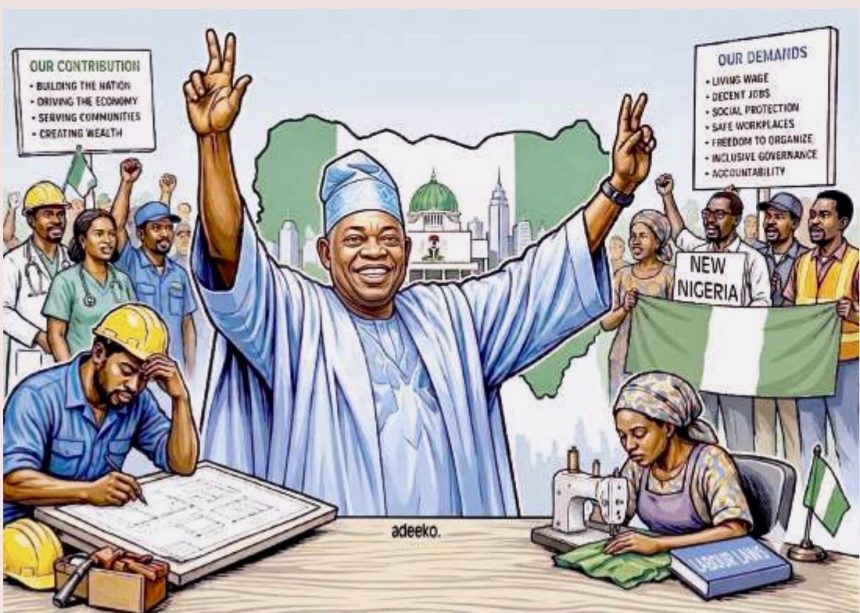
Nearly three decades later, democracy has endured. Elections have been conducted, governments have come and gone, and constitutional rule has remained uninterrupted. Yet for millions of Nigerians battling unemployment, inflation, insecurity and declining living standards. As Nigeria marks Democracy Day on June 12, a fundamental question persists: have Nigeria’s political elites delivered on the promise of democracy? CHRISTIAN APPOLOS, in the report, presents the assessment of some selected labour leaders to the question.
What democracy has achieved
DESPITE the challenges, organised labour acknowledges that Nigeria’s democratic journey has recorded important gains.
The preservation of constitutional rule, expansion of civic freedoms, improved citizen participation in governance and the strengthening of democratic institutions stand out among the notable achievements of the past 27 years.
For many labour leaders, the fact that Nigeria has maintained uninterrupted civilian governance since 1999 represents a significant departure from an era characterised by military interventions and political instability.
Workers today enjoy greater freedom to organise, negotiate and advocate for their interests. Civil society organisations, labour unions and the media continue to play active roles in shaping public discourse and holding governments accountable. Recent efforts to strengthen local government autonomy have also rekindled hopes of bringing governance closer to the people and improving grassroots development.
Yet, while democracy has survived and democratic institutions have matured, labour leaders insist that political stability alone cannot be the ultimate measure of success. They argue that democracy must also deliver economic opportunities, quality public services and improved living standards.
Education: Progress Amid Persistent Challenges
For university workers, the gap between democratic promises and actual outcomes remains evident in the state of Nigeria’s education sector.
President of the Senior Staff Association of Nigerian Universities (SSANU), Comrade Mohammed Ibrahim, notes that while democracy has created avenues for engagement and participation, public education continues to face serious challenges.
“The return to democracy has undoubtedly expanded civic freedoms and given Nigerians opportunities to participate in governance. However, when we assess the condition of public education, especially our universities, many citizens would argue that the expectations have not been fully met.
“Successive political leaders have often acknowledged the importance of education, yet funding remains inadequate. University infrastructure is overstretched, research support is limited and workers continue to battle welfare challenges. The recurring industrial disputes in the university system over the years are evidence that critical issues have remained unresolved.
“One would have expected that after more than two decades of democratic governance, our universities would rank among the best globally and become centres of innovation driving national development. Unfortunately, many institutions are still struggling with obsolete facilities and insufficient investment.
“That said, democracy has provided room for engagement and dialogue. Workers can organise, negotiate and advocate for reforms. What Nigerians expect now is leadership that matches democratic promises with concrete action, particularly in education where the future of the nation is being shaped.”
A similar concern is shared by the President of the Non-Academic Staff Union of Educational and Associated Institutions (NASU), Comrade Hassan Makolo, who believes that the strengthening of public institutions remains one of democracy’s unfinished tasks.
“When democracy returned in 1999, Nigerians anticipated that public institutions would become stronger and more efficient. While there have been improvements in some areas, the reality is that many public institutions still struggle with challenges that should have been addressed long ago.
“In the education sector, non-teaching staff have consistently contributed to keeping institutions running despite difficult conditions. Yet issues relating to remuneration, career progression and institutional funding remain recurring concerns.
“The political elite deserve credit for preserving democratic rule and avoiding disruptions to constitutional governance. However, democracy should not be measured only by political stability. It should also be measured by how effectively public institutions serve citizens.
“Many Nigerians are frustrated because economic hardship has continued despite abundant national resources. Workers expect policies that create jobs, strengthen public services and reduce inequality.
“Our democracy has survived, but it must now deliver more tangible benefits to ordinary Nigerians.”
Grassroots development and local government autonomy
For workers at the local government level, one of the biggest disappointments of the democratic era has been the inability of local councils to fully perform their constitutional responsibilities.
President-General of the Nigeria Union of Local Government Employees (NULGE), Comrade Aliyu Haruna Kankara, says many Nigerians expected democracy to bring governance closer to the people.
“For workers at the grassroots, democracy has delivered mixed outcomes. The greatest expectation of Nigerians was that the government would become more responsive to the people because democracy is supposed to bring governance closer to citizens.
“Unfortunately, local government administration, which is the tier closest to the people, has not functioned optimally in many parts of the country. Issues relating to local government autonomy remained unresolved for years and affected service delivery at the grassroots.
“Recent developments, especially the push for full financial autonomy for local governments following the Supreme Court judgment, have renewed hope. If properly implemented, it could significantly improve development in rural communities.
“However, many communities still lack good roads, primary healthcare facilities, potable water and employment opportunities. Young people continue to migrate from rural areas because opportunities are limited.
“The political elite have made progress in sustaining democratic governance, but Nigerians expect more than elections. They want visible improvements in their daily lives. Democracy must translate into development at the grassroots.”
Healthcare and the welfare of citizens
For health workers, the quality of healthcare available to citizens remains one of the clearest indicators of whether democratic governance is meeting public expectations.
President of the Medical and Health Workers’ Union of Nigeria (MHWUN), Comrade (Dr.) Kabiru Ado Sani Minjibir, says progress has been recorded, but major gaps remain.
“The health sector provides perhaps one of the clearest indicators of whether the government is meeting the expectations of the people. Every Nigerian, regardless of status, desires access to affordable and quality healthcare.
“Over the years, governments have launched several reforms and programmes, and there have been investments in some health facilities. However, significant gaps remain. Many hospitals still face shortages of personnel, equipment and essential infrastructure.
“One of our greatest concerns is the continued migration of health professionals seeking better opportunities abroad. This trend reflects challenges relating to remuneration, working conditions and career prospects.
“Nigerians expected democracy to guarantee better healthcare outcomes and improved social welfare. While some progress has been made, many families still struggle to access quality medical services.
“The political elite must recognise that healthcare is not a privilege but a fundamental necessity. The true test of democracy is how effectively it protects the welfare and dignity of its citizens.”
Economic hardship and workers’ expectations
While labour leaders acknowledge democratic gains, many argue that the daily realities confronting workers have raised questions about whether democracy has delivered economic justice.
Acting General Secretary of the Nigeria Labour Congress (NLC), Comrade Benson Upah, says the true test of democracy lies in its impact on the lives of citizens.
“Democracy has endured in Nigeria for over two decades, and that in itself is significant. Citizens enjoy greater freedoms of expression and association than under military rule. However, democracy must ultimately be judged by its impact on people’s lives.
“Many workers and ordinary Nigerians continue to grapple with rising living costs, unemployment, insecurity and declining purchasing power. These realities have understandably raised questions about whether democratic governance has translated into economic justice.
“The expectation of Nigerians in 1999 was not merely the conduct of elections. They expected accountable leadership, inclusive growth, decent jobs, reliable public services and opportunities for future generations.
“The labour movement recognises the progress that has been made in strengthening democratic institutions, but much work remains. The challenge before the political elite is to reconnect governance with the needs of the people.
“As we mark Democracy Day, our message is simple: democracy must work for the majority. The success of our democratic journey will not be measured by the number of years civilian rule has endured, but by the quality of life experienced by ordinary Nigerians.”
The verdict
The verdict from organised labour is clear: democracy has survived, but survival alone is not enough. Twenty-seven years after the return to civilian rule, Nigerians can point to significant democratic gains, including constitutional governance, expanded civic freedoms and greater political participation.
Yet many of the economic and social aspirations that fuelled the struggle for democracy remain unfulfilled.
Across universities, hospitals, local government councils and workplaces, the demand is the same: governance that improves lives. Labour leaders argue that while democratic institutions have become more stable, the dividends of democracy remain unevenly distributed and often insufficiently felt by ordinary citizens.
ALSO READ: ADC to Tinubu: Stop making promises after three years in office
As Nigeria marks another Democracy Day, the challenge before the political elite is no longer simply to preserve democracy, but to make it meaningful for the millions of Nigerians who continue to look to democratic governance for jobs, quality education, affordable healthcare, security and a better future.
For many citizens, the true measure of democracy is not the regular conduct of elections but whether it delivers tangible improvements in their daily lives. On that score, organised labour believes the journey remains unfinished.
WATCH TOP VIDEOS FROM NIGERIAN TRIBUNE TV
- Relationship Hangout: Public vs Private Proposals – Which Truly Wins in Love?
- “No” Is a Complete Sentence: Why You Should Stop Feeling Guilty
- Relationship Hangout: Friendship Talk 2025 – How to Be a Good Friend & Big Questions on Friendship
- Police Overpower Armed Robbers in Ibadan After Fierce Struggle


