
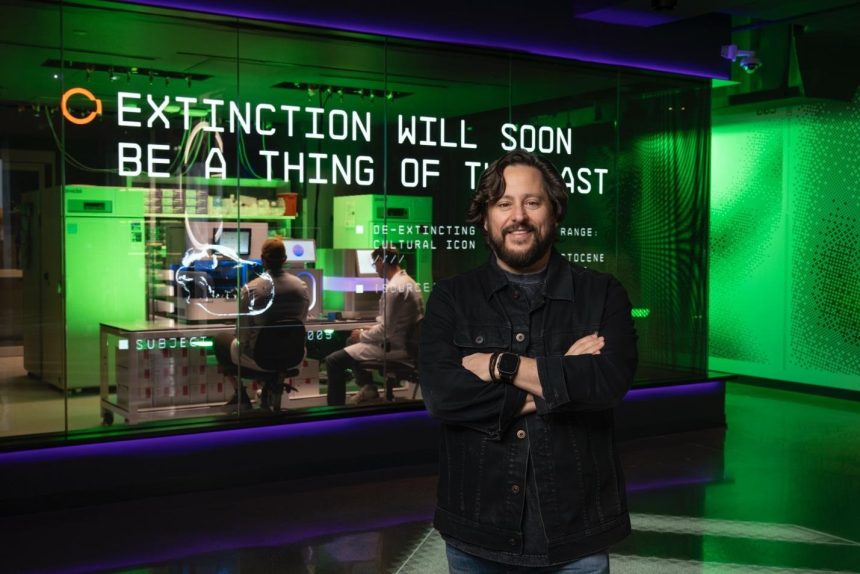
A pattern runs through every species Colossal Biosciences has taken on. Its thylacine work produced a genetic solution to equip the northern quoll with natural resistance to the deadly cane toad toxin. The dire wolf program produced de-extinction technologies now being used to assist endangered red “ghost” wolves. The South Island giant moa brought avian genomics infrastructure into the fold.
The bluebuck, a silvery, slate-blue antelope that vanished from Southern Africa around 1800, is Colossal’s next de-extinction target and its first on the African continent.
The announcement places the company in territory it hasn’t worked before, with a group of animals that have received comparatively little attention from advanced conservation biotechnology.
What Is Functional De-Extinction?
Colossal uses the term functional de-extinction to describe the process of generating an organism that both resembles and is genetically similar to an extinct species. The process involves resurrecting its lost lineage of core genes, engineering natural resistances, and enhancing adaptability that will allow it to thrive in today’s environment of climate change, dwindling resources, disease, and human interference. Resemblance to the fossil record is part of the goal, and so is viability in a changed world.
The bluebuck presents a specific challenge. It disappeared 34 years after it was first scientifically described. Only a handful of museum specimens exist, and a 2021 genetic study found that of 6 putative bluebuck specimens across European collections, only 4 were actually the species in question. The rest were roan or sable antelope, misidentified for generations.
But from that limited material, researchers assembled something substantial. In 2024, a team including scientists from Colossal, the University of Potsdam, and the Museum für Naturkunde Berlin produced the first 40x high-coverage bluebuck genome, drawn from a mounted specimen at the Swedish Museum of Natural History in Stockholm. The animal had maintained genetic health until colonial-era hunting pressure suddenly collapsed its population.
Colossal’s team has since produced the world’s first induced pluripotent stem cells (iPSCs) from roan antelope, the species selected as a surrogate because it most closely resembles the bluebuck phenotypically. The team has also achieved the first successful ovum pickup procedures in two antelope species. Engineers are now working to introduce bluebuck genetic variants into roan iPSCs.
A Different Animal in a Different World
What distinguishes the bluebuck program from earlier Colossal projects is less about the techniques involved and more about where they’re being directed. Previous de-extinction work focused on North American and Australian megafauna and, to a lesser extent, the avian record.
The bluebuck opens a different chapter, set in sub-Saharan Africa, where conservation stakes are acute. According to the IUCN, 29 of the world’s 90 antelope species are currently threatened with extinction, and populations are declining in 62% of all antelope species.
Genome sequencing protocols, iPSC pipelines, ovum pickup procedures, and biobanking infrastructure developed for the bluebuck program aren’t purpose-built for a single extinct species. This infrastructure could give conservationists new options for living antelope populations under pressure from habitat loss, poaching, and climate stress.
That dual-track logic has characterized Colossal’s approach throughout. The dire wolf program produced de-extinction technologies that benefit the red wolves. The mammoth program produced the first mRNA vaccine for EEHV, a deadly herpes virus responsible for deaths in juvenile elephants. The bluebuck program is being built the same way: a specific animal at the center, a broader species group in the downstream.
Colossal Biosciences is collaborating with the Endangered Wildlife Trust, a South African conservation organization, on a responsible pathway toward eventual rewilding. The bluebuck’s historic range included the renosterveld along South Africa’s southwestern Cape, an ecosystem reduced to roughly 5 percent of its original extent. Returning the species to habitat that no longer fully exists means the ecological work runs parallel to the biological work.
“African antelopes have long been neglected in global conservation,” said Dr. Beth Shapiro, Chief Science Officer at Colossal Biosciences. “We’re bringing back a species that played a vital role in its ecosystem, and building the scientific foundation for antelope conservation before more of its relatives are lost.”
WATCH TOP VIDEOS FROM NIGERIAN TRIBUNE TV
- Relationship Hangout: Public vs Private Proposals – Which Truly Wins in Love?
- “No” Is a Complete Sentence: Why You Should Stop Feeling Guilty
- Relationship Hangout: Friendship Talk 2025 – How to Be a Good Friend & Big Questions on Friendship
- Police Overpower Armed Robbers in Ibadan After Fierce Struggle


