
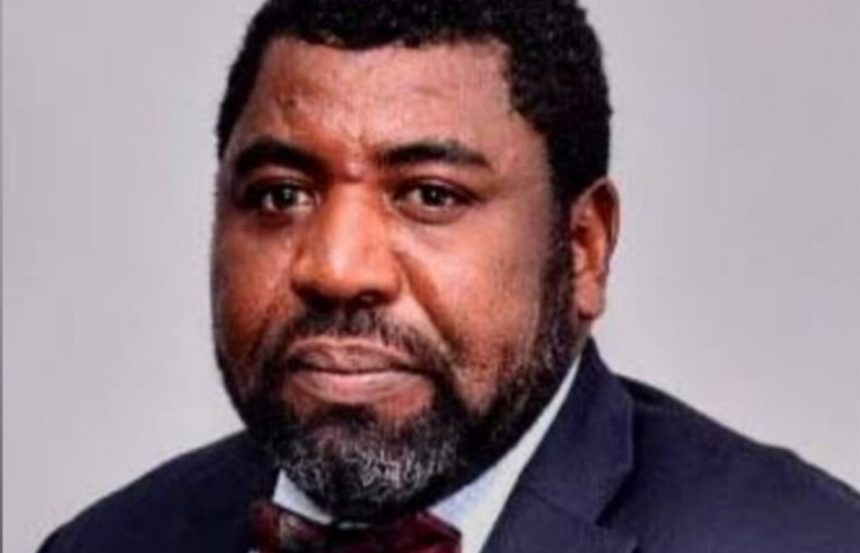
DIRECTOR, Commonwealth Institute of Advanced and Professional Studies (CIAPS), Professor Anthony Kila, has warned politicians against relegating fundamental issues concerning Nigeria’s future for mundane issues less than seven months to the general election.
Professor Kila, who spoke to the Nigerian Tribune on Sunday, believes that it amounts to disservice for the gladiators to limit conversations to non-salient issues at the expense of core problems begging for answers.
The renowned political economist and jurist heads Strategy and Advocacy Committee on Constitutional Reform of Nigeria of The Patriots, led by former Commonwealth Secretary-General Chief Emeka Anyaoku, lamented that the politicians are preoccupied with discussing defections and choice of running mate, instead of asking strategic questions concerning building and strengthening institution, job creation, troubled economy, among other pertinent issues.
He warned that until ideas become more valuable than slogans, campaigns will remain exciting without necessarily being enlightening, because mature democracies ask a different question: win to do what?
“Six months before an election is the period when a nation ought to be debating its future, not merely discussing its politicians. The central questions should be straightforward: How do we create jobs? How do we secure lives and property?
“How do we improve education and healthcare? How do we make government more efficient? How do we build an economy that produces rather than merely consumes? How do we ensure justice and strengthen institutions?
“Unfortunately, in Nigeria, these strategic questions often compete with tactical conversations. Instead of asking what kind of country we want in 10 or 20 years, we spend too much time discussing who will defect to which party; who will become whose running mate, and which coalition is gaining or losing momentum.”
READ ALSO: Politicians should campaign with results, not promises
Professor Kila decried that politics has become an endless conversation about the actors, rather than public outcomes, whereas every election should be an opportunity to renegotiate the social contract between citizens and the state.
He added: “Too often, it becomes an exercise in renegotiating alliances among political elites. The real campaign Nigerians should demand is not a competition of pes but a competition of ideas.”
He declared that the gladiators, candidates and parties have not demonstrated much attention to core national problems.
At this stage, not nearly enough. Most political actors are still investing more energy in electoral arithmetic than in policy architecture. “They are counting delegates, negotiating alliances, measuring regional strengths and calculating electoral pathways. Those activities are part of politics, but they should not become substitutes for governance.
“The tragedy is that many politicians assume voters are interested only in who can win. Mature democracies ask a different question: win to do what?
“Many parties have manifestos, but very few are campaigning around them. Even fewer are explaining difficult policy choices. Governing a country requires making trade-offs. Leadership is not promising everything to everyone; it is explaining priorities honestly.
“Nigeria deserves campaigns where candidates openly debate taxation, energy policy, constitutional reform, education, industrialisation, food security, security architecture and the future of federalism. Those are the conversations that determine whether elections change lives or merely change office holders.
On the gap in the existing political trend, he said blaming one group alone would be too simplistic as the politicians deserve criticism for preferring easy promises to difficult conversations, stressing that political parties deserve criticism for becoming election vehicles rather than centres of policy development.
“However, the responsibility does not end there. The media must also ask harder questions. Instead of concentrating overwhelmingly on political drama, defections and campaign strategy, journalists should consistently interrogate policy,” he said.
“Every interview should ask not only “Can you win?” but also “What exactly will you do, how will you fund it, and how will Nigerians measure your success?”
“Civil society, universities, professional bodies and think tanks must equally do more to shape the national conversation. Democracies become stronger when intellectuals help define the agenda rather than merely comment on events.
“Finally, citizens themselves have responsibilities. Politicians rarely rise above the expectations of the electorate. If voters reward ethnicity over competence, noise over knowledge, or popularity over performance, politicians will simply respond to those incentives.”
Nonetheless, Kila said there is a ray of hope because of his belief that the current cycle can be broken.
“The quality of democracy improves when elections become competitions of ideas rather than contests of identities.
“Nigeria has enough talented people, enough resources, and enough experience to have issue-based politics. What has been missing is not capacity but collective insistence.
“In the end, a country does not become what its politicians promise; it becomes what its citizens consistently demand.
“That is why the most important campaign in any democracy is not the one political party runs. It is the campaign citizens run to insist that ideas matter more than personalities,” he stated.
He noted that one of the existing widest democratic gaps is that citizens are not running their own campaign, stating: “Every election has two campaigns: the politicians’ campaign to win power and the citizens’ campaign to define how that power should be used.
“In Nigeria, the first campaign is loud and relentless; the second is often absent. That is why we spend so much time discussing candidates and so little time debating the country we want to build.”
WATCH TOP VIDEOS FROM NIGERIAN TRIBUNE TV
- Relationship Hangout: Public vs Private Proposals – Which Truly Wins in Love?
- “No” Is a Complete Sentence: Why You Should Stop Feeling Guilty
- Relationship Hangout: Friendship Talk 2025 – How to Be a Good Friend & Big Questions on Friendship
- Police Overpower Armed Robbers in Ibadan After Fierce Struggle


