Several political parties have now nominated their presidential candidates for the 2027 general election. At least three parties have nominated parallel candidates, leaving their future in the hands of the courts. In this report, PHILIP IBITOYE takes an in-depth look at each candidate, analysing their antecedents and likely chances against President Bola Tinubu in the January 2027 election.
Saturday, May 30, 2027, was the deadline set by the Independent National Electoral Commission (INEC) for the conclusion of primaries for the emergence of presidential candidates who will participate in the January 2027 election. Although two different judges of the Federal High Court in Abuja recently issued conflicting rulings on the validity of the INEC timetable, particularly the deadline for candidate nominations, parties nevertheless took no chances and continued working within the electoral umpire’s original timelines to complete their primaries.
This means that at least ten political parties have so far nominated their candidates. They include the All Progressives Congress (APC), African Democratic Congress (ADC), Nigeria Democratic Congress (NDC), Peoples Democratic Party (PDP), Peoples Redemption Party (PRP), Social Democratic Party (SDP), Allied Peoples Movement (APM), African Action Congress (AAC), Action Democratic Party (ADP), and Accord Party. Although there are only ten political parties in the contest, 13 candidates are in the mix due to the factional crisis rocking three parties – ADC, PDP, and SDP – leading them to present multiple candidates.
Notably, INEC can only recognise one candidate for each party, but with internal party democracy in Nigeria often subjected to legal scrutiny, the courts are expected to have the final say on the candidates that the electoral umpire ultimately places on the ballot.
Although ten parties are being paraded for the forthcoming election, political observers believe that the election will end up being a three or four-horse race at the end of the day. The situation would thus throw up a likely repeat of the 2023 scenario, when Bola Tinubu of APC, Atiku Abubakar, then of PDP, Peter Obi, then of Labour Party, and Rabiu Kwankwaso, then of the New Nigeria Peoples Party (NNPP), garnered 97% of the votes. With Kwankwaso teaming up with Obi in the NDC ahead of the 2027 race, Tinubu, Obi, and Atiku are expected to further headline the contest, With the uncertain entry of former President Goodluck Jonathan as a wildcard on the ticket of the Kabiru Turaki-led PDP, there may well be another four-horse race in next year’s presidential poll, especially if the courts end up legitimising the Turaki faction of the PDP.
From the incumbent president seeking a second mandate to veteran opposition figures making yet another attempt at the country’s highest office, the candidates who have emerged so far represent a cross-section of Nigeria’s political history: familiar names, recycled ambitions, and a handful of newer entrants hoping to break through.
THE INCUMBENT
Bola Tinubu — APC
President Bola Tinubu enters the 2027 race as the incumbent seeking a second term, having secured the APC’s presidential ticket on Saturday, May 23, with 10,999,162 votes against his sole challenger, businessman Stanley Osifo, who polled 16,503. The near-unanimous margin reflected the weight of incumbency and the loyalty of 31 state governors who anchored his campaign structure nationwide.
Outside the party, however, it is believed that the 2027 race will be as much a referendum on governance as it is a political contest. Tinubu assumed office in May 2023, inheriting an economy that was battered by subsidy distortions and a weakened currency, and on the day of his inauguration, he removed the petrol subsidy and days later, he floated the naira — twin reforms that significantly reduced the purchasing power of the Nigerian and unleashed severe short-term hardship on ordinary people. Inflation peaked sharply, the cost of food and transportation surged, and poverty deepened across multiple indicators. In a statement marking his third year in office on Friday, 29 May, his administration claimed the “renewed hope” he promised Nigerians had been delivered. Voters will be the judge of that.
His supporters point to macroeconomic stabilisation, a recovering naira, and ongoing infrastructure projects. His critics argue that the pain of reform has been disproportionately borne by the poor while elite interests have been protected. In 2023, Tinubu won with roughly 37 per cent of the votes — the lowest winning margin in Nigeria’s democratic history — in a four-way race. With the opposition now reconstituted, though still fragmented, his structural advantages could be further tested.
THE OPPOSITION
Atiku Abubakar — ADC (INEC-recognised)
Atiku is contesting a presidential election for what is effectively his seventh attempt, though the sixth in this Republic. He had previously sought the office in 1993 and had also pursued the presidency in 2007, 2011, 2015, 2019, and 2023. He emerged as the presidential candidate of the INEC-recognised ADC on Wednesday, May 27, polling 1,846,370 votes in the party’s nationwide direct primary, defeating former Minister of Transportation, Rotimi Amaechi (504,117 votes) and former banker Mohammed Hayatu-Deen (177,120 votes).
The victory was immediately disputed. Both Amaechi and Hayatu-Deen rejected the outcome, with Amaechi describing the results as “concocted” and vowing to seek redress in court — a development that threatened to drag the ADC into litigation at the very moment it needs to focus on campaigns. But that tension eased on Thursday after Atiku visited Amaechi at his Abuja residence, with both men having “deep and honest conversations”.
READ ALSO: 2027 elections: CSOs kick against INEC’s appeal of judgment nullifying portions of timetable
Atiku came second in the 2023 election under the PDP, polling around 29 per cent of votes. His enduring appeal rests on a vast political network spanning the North, well-oiled campaign machinery, and decades of national-level political experience. His persistent weakness, however, is a question that has haunted him across multiple cycles: can a candidate who has sought the presidency this many times without success convince a skeptical electorate that the next attempt will be different?
Peter Obi — NDC
Peter Obi’s 2027 campaign is being built on the ruins of turbulent post-2023 realignment. The former Anambra governor came third in 2023 under the Labour Party, recording approximately 25 per cent of the votes in a performance that confounded establishment expectations and projected his “Obidient” movement as a serious generational political force.
Since then, he has switched parties twice — from Labour Party to the ADC, then from the ADC to the NDC — citing internal crises and a toxic political environment at each juncture. The NDC, led by former Bayelsa governor Seriake Dickson, announced Obi as its unopposed presidential candidate, with former Kano governor Rabiu Kwankwaso widely expected to emerge as his running mate, replicating a southern-northern alliance that closely mirrors the configuration many had anticipated in 2023.
The Obi-Kwankwaso pairing, if formalised, would combine Obi’s strong support in the South-East, parts of the South-West, and urban youth constituencies with Kwankwaso’s formidable Kano base. Whether the NDC can build the organisational infrastructure to match that coalition’s theoretical appeal is the central question. Obi remains among the top three candidates observers expect to shape the 2027 outcome.
Goodluck Jonathan — PDP (Turaki faction, not INEC-recognised)
The prospect of former President Goodluck Jonathan re-entering the race had remained a speculation even at press time. This is because the electoral umpire has not accorded the needed recognition to the Turaki-led PDP faction that is projecting the former president.
Sunday Tribune gathered that the calculations driving his potential candidacy extend beyond the former president himself. Northern political elites who neither want President Tinubu re-elected nor are convinced by Obi’s pledge to serve only one term are said to be actively amenable to a Jonathan return. Their reasoning is that a Jonathan presidency would shut out Tinubu from a second term while constitutionally guaranteeing a return of the presidency to the North by 2031, since Jonathan, having already served one full term, cannot constitutionally seek more than one additional term in office. That arithmetic is proving persuasive in circles that view the 2027 election as an inflection point for power rotation.
The path to the ballot, however, remains contested. The Turaki faction of the PDP, which officially nominated Jonathan on Saturday in his absence, is not recognised by INEC. The INEC-recognised faction is the Nyesom Wike-aligned NWC, which has produced a different candidate. On Friday, the faction urged the former president to ignore attempts to draft him into the race.
Last week, a Federal High Court ruled that Jonathan is constitutionally eligible to contest, clearing the way for him to enter the 2027 race. But he has not publicly confirmed his candidacy. Earlier this month, the former president told youth groups who visited him to press for his return to presidential politics that he would consult widely. “I’ve heard you loud and clear. I will consult widely before taking any decision,” Jonathan said on May 7, 2026.
Whether he ultimately appears on the ballot will depend on a combination of his personal convictions and legal outcome.
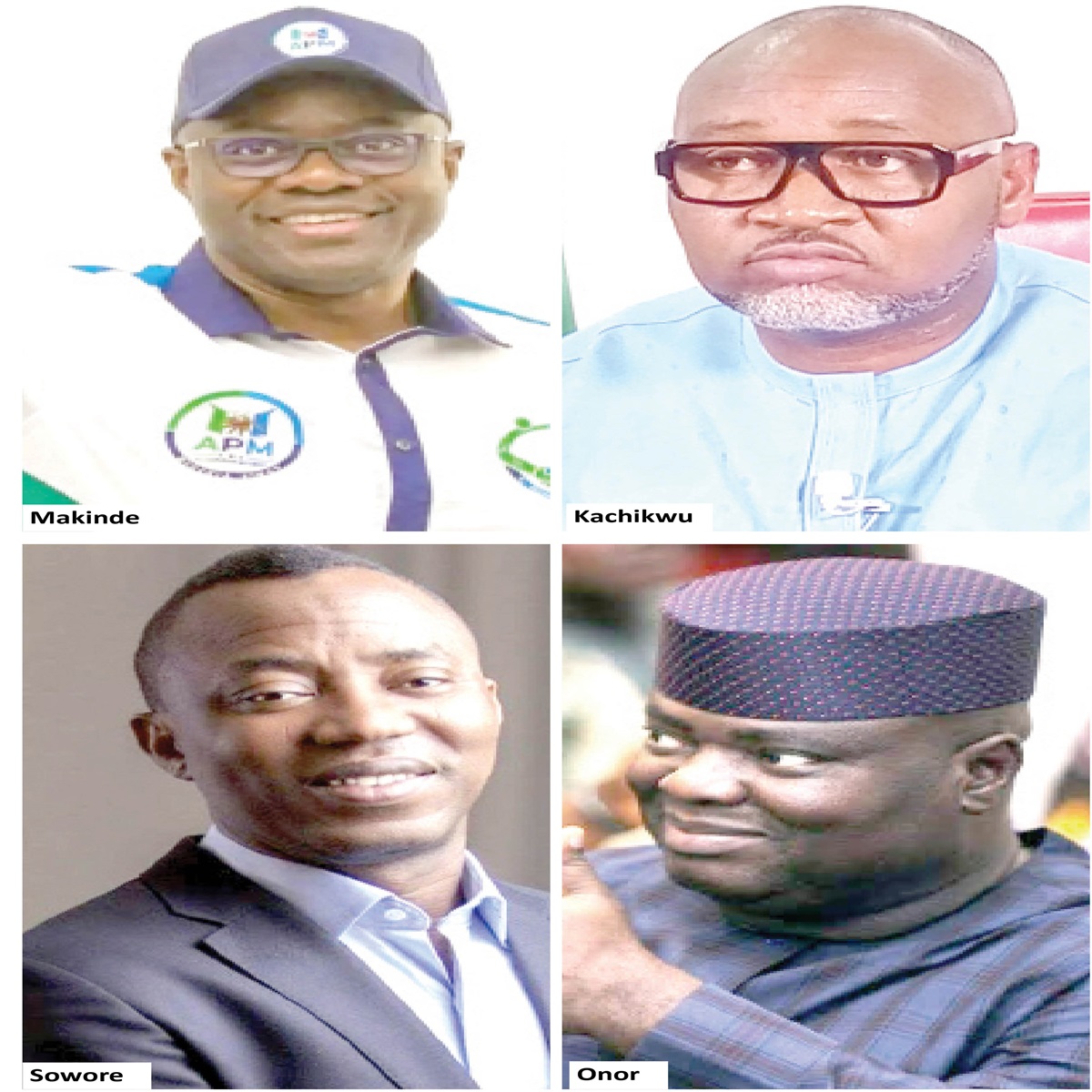
Seyi Makinde — APM
Oyo State governor, Seyi Makinde declared his presidential intention on the APM platform, drawing an immediate response from FCT Minister Wike, who dismissed the ambition as “dead on arrival” and denied any formal alliance between the PDP and APM.
His candidacy, which was affirmed at the party’s national convention in Ibadan on Saturday, carries specific significance for Tinubu in the South-West. In the 2023 presidential election, Tinubu won Oyo State with 449,884 votes, defeating Atiku, who polled 182,977 and Obi, who got 99,110 votes.
Yet those numbers existed alongside a parallel political reality: in the governorship election held three weeks later, Makinde, then of the PDP, won re-election with 563,756 votes against the APC’s Teslim Folarin, who polled 256,685. The Oyo governor won 31 of Oyo’s 33 local government areas, taking nearly 63 per cent of the votes — a margin of victory unprecedented in the state’s Fourth Republic history. The coexistence of a Tinubu presidential win and a Makinde governorship landslide in the same state in 2023 illustrates the split-ticket character of Oyo’s electorate.
A Makinde candidacy, even if ultimately modest nationally, threatens to complicate Tinubu’s vote share in the South-West, a region the president counts as part of his base. How much of that vote Makinde can peel away, particularly in Oyo, is a question the APC will be watching closely.
Sandy Onor — PDP (INEC-recognised Wike faction)
Onor previously served as senator representing Cross River Central Senatorial District in the 9th National Assembly from 2019 to 2023, and was also the PDP’s governorship candidate in Cross River State in 2023. The Wike-aligned faction of the PDP, whose NWC is recognised by INEC, declared Onor as its consensus presidential candidate following nationwide consultations announced by former Benue governor Samuel Ortom last Tuesday.
Political observers, however, are largely unmoved by his candidacy. With the FCT minister openly aligned with the Tinubu administration, Onor is widely regarded in political circles as a placeholder candidate, present on the ballot to satisfy the mechanics of opposition without being expected to mount any serious challenge to the incumbent. His emergence is seen as reflecting the Wike faction’s continued accommodation of the APC government rather than a genuine bid to dislodge it.
Donald Duke — PRP
Former Cross River State governor, Donald Duke, won the PRP presidential ticket onTuesday, May 26, polling 6,499 votes to defeat Kingsley Yakubu (2,699 votes) and policy expert Nnaoke Ufere (784 votes) at the party’s Abuja primary.
Duke contested the PDP presidential primary in 2019 before withdrawing, making 2027 his most sustained attempt at the presidency. His emergence was disputed by the Ufere campaign, which alleged that he joined the PRP only days before the primary, did not campaign publicly at any point, and was reportedly outside the country while the election was being conducted — yet swept state after state in the results.
Duke is a respected figure with a reputation for creative governance during his Cross River tenure, but the PRP has limited national reach, and the circumstances of his emergence have already clouded the legitimacy of his candidacy within the party.
Omoyele Sowore — AAC
Omoyele Sowore was adopted as the AAC presidential candidate at the party’s primary in Abuja, with the election committee describing his emergence as reflecting the party’s confidence in his commitment to democratic ideals.
This is Sowore’s third consecutive presidential bid, having polled 33,953 votes in 2019 and 14,608 votes in 2023. An unrelenting critic of Nigeria’s political establishment, Sowore contests on a socialist, anti-corruption platform that resonates with a specific constituency but has never translated into significant electoral numbers.
According to observers, his persistent presence on the ballot serves a different function — maintaining an ideological reference point in a race largely seen as dominated by transactional politics.
Adewole Adebayo — SDP (Gombe faction)
Adewole Adebayo emerged as the SDP’s presidential candidate at the party’s national convention in Bauchi, adopted by consensus by delegates from all 36 states and the FCT. This is his second presidential bid, having contested in 2023.
The Supreme Court, in a unanimous judgment delivered on May 22, 2026, nullified the Court of Appeal ruling that had formed the basis for INEC’s recognition of the Shehu Gabam faction, effectively restoring the Sadiq Gombe-led NWC as the lawful leadership of the party. That ruling significantly strengthens Adebayo’s claim to the SDP’s ballot slot, though the dispute is not fully resolved and the courts may yet have the final word.
Abimbola Atanda — SDP (Gabam faction)
Abimbola Atanda is the presidential candidate of the Gabam-led faction, whose recognition by INEC was built on a Court of Appeal judgment that the Supreme Court unanimously set aside on May 22, 2026.
With the legal foundation of Gabam’s leadership dismantled, Atanda’s path to the ballot has become considerably more uncertain, pending any further litigation or court intervention.
Dumebi Kachikwu — ADC (rival faction, not INEC-recognised)
Kachikwu was adopted as presidential candidate by an ADC faction at a national convention on 24 May, one day before the INEC-recognised David Mark faction held its primary that produced Atiku.
Kachikwu, the ADC’s 2023 presidential candidate, had spent months warning that the party’s coalition structure was being packaged exclusively for Atiku’s ambition. His rival candidacy represents a factional protest rather than a viable independent bid, and without INEC’s recognition, his route to the ballot can only materialise through the courts.
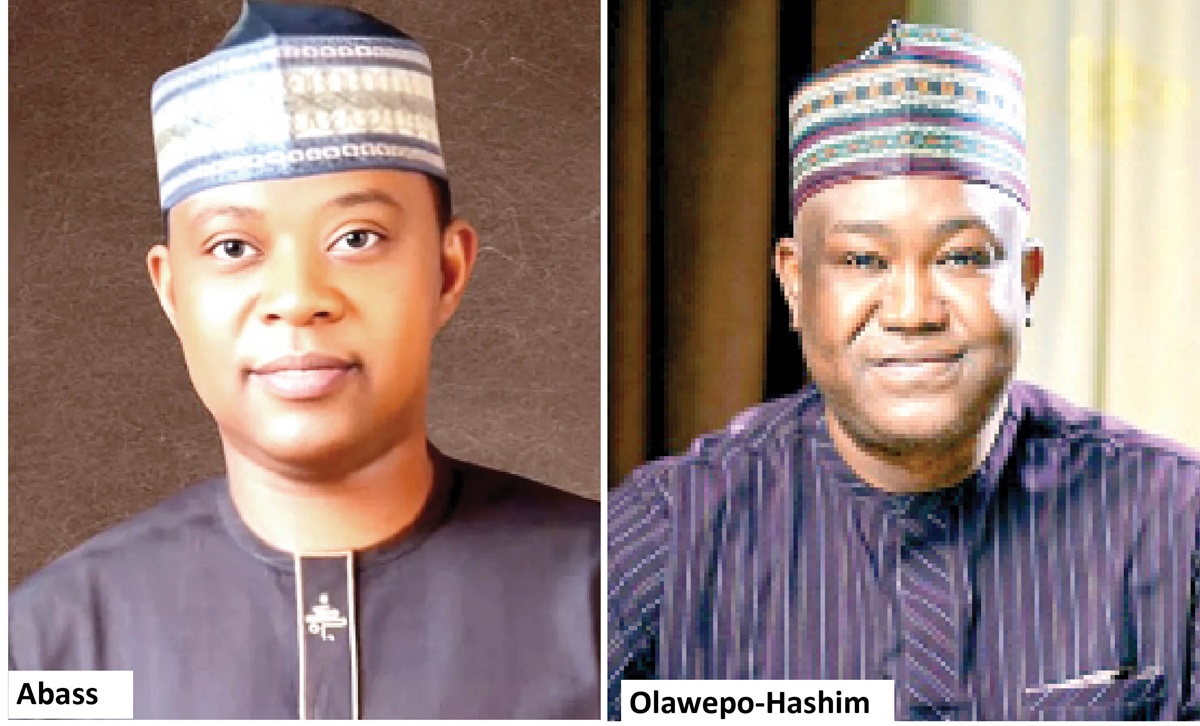
Gbenga Olawepo-Hashim — Accord Party
Olawepo-Hashim formally confirmed membership of the Accord Party and declared his 2027 presidential ambition last week, stating that his movement had already mobilised over one million supporters into the party nationwide.
He is a businessman and policy advocate who contested the 2019 election under Peoples Trust, and has remained active in opposition coalition discussions. The Accord Party has historically been a minor electoral force, but Olawepo-Hashim’s candidacy could be the tonic it needs to bolster its national presence. Substantially, his candidacy adds to the plurality of voices presenting alternative platforms to the dominant parties, especially considering his consistent progressive inclinations.
Aliyu Bin Abbas — ADP
Ambassador Aliyu Bin Abbas, founder of the National Youth Alliance, emerged as the ADP’s presidential candidate at the party’s national convention in Abuja in the early hours of Saturday. A former political aide to Atiku, his campaign has been at pains to distance itself from that association, insisting the two parted ways following a recognised political divergence and that his candidacy is entirely autonomous.
Abbas has framed his bid around youth inclusion and generational change, but the ADP has limited national electoral footprint and he remains a relatively obscure figure at the presidential level.
The stakes of a divided opposition
The pattern that defined the 2023 presidential election — a ruling party candidate winning with a historically low plurality against a fragmented opposition — is likely to repeat itself in 2027. Political analysts have warned that the opposition’s inability to coalesce around a single candidate remains its single most debilitating structural weakness, and the events of recent months have done little to change that assessment.
“I have not seen how a divided opposition can win in 2027 except maybe at the dying minute they decide to collapse their structures — some persons stepping down for the other,” Liborous Oshoma, a lawyer and political analyst, told Sunday Tribune. “It will be worse than in 2023 when they all worked on a level playing field because none of them was in power. In 2027, you now have one who is in power against others,” he said.
Similarly, Adebola Rauf Bakare, an Associate Professor of Political Science, has said the only way to defeat Tinubu is for the opposition to unite. “As long as the opposition is divided into different political parties, it will be extremely difficult for them to defeat Tinubu,” he said in an interview with Sunday Tribune. “For you to defeat an incumbent president, you need a coalition,” he added.
For Tinubu, the best-case scenario is precisely what is now unfolding: Atiku in the ADC, Obi in the NDC, possibly Jonathan on a separate platform, Makinde on the APM platform, and several smaller candidates further diluting the anti-incumbency vote. In 2023, Tinubu won with 8.79 million votes out of approximately 24.8 million total votes cast. The combined votes of Atiku and Obi grossed around 13 million, far exceeding Tinubu’s total by a margin — a mathematical reality that underlines why consolidation matters. A united opposition ticket pairing a Northern and Southern candidate with broad coalitional support remains the scenario the APC fears most, according to observers.
That scenario has, however, not materialised. What we have seen instead is a race in which the three leading opposition blocs — Atiku’s ADC coalition, Obi’s NDC alliance with Kwankwaso, and the speculative Jonathan mobilisation — are each pursuing independent campaigns, each with legitimate claims to significant vote constituencies, and none with a clear path to victory on its own. If Jonathan enters the equation, he could draw from exactly the same Northern Muslim voter pool that Atiku needs, further complicating the arithmetic.
The worst-case scenario for those seeking to defeat the incumbent is a repeat of 2023 at scale: a president whose popularity has been battered by economic hardship nevertheless wins because his opponents cannot agree on who among them is better placed to beat him.
However, many political analysts believe that the president’s own popularity and how Nigerians ultimately judge three years of his “renewed hope” agenda will be as decisive as any political dynamic.
WATCH TOP VIDEOS FROM NIGERIAN TRIBUNE TV
- Relationship Hangout: Public vs Private Proposals – Which Truly Wins in Love?
- “No” Is a Complete Sentence: Why You Should Stop Feeling Guilty
- Relationship Hangout: Friendship Talk 2025 – How to Be a Good Friend & Big Questions on Friendship
- Police Overpower Armed Robbers in Ibadan After Fierce Struggle